Page 2 - A Closer Look - Keyboard Hardware and Software

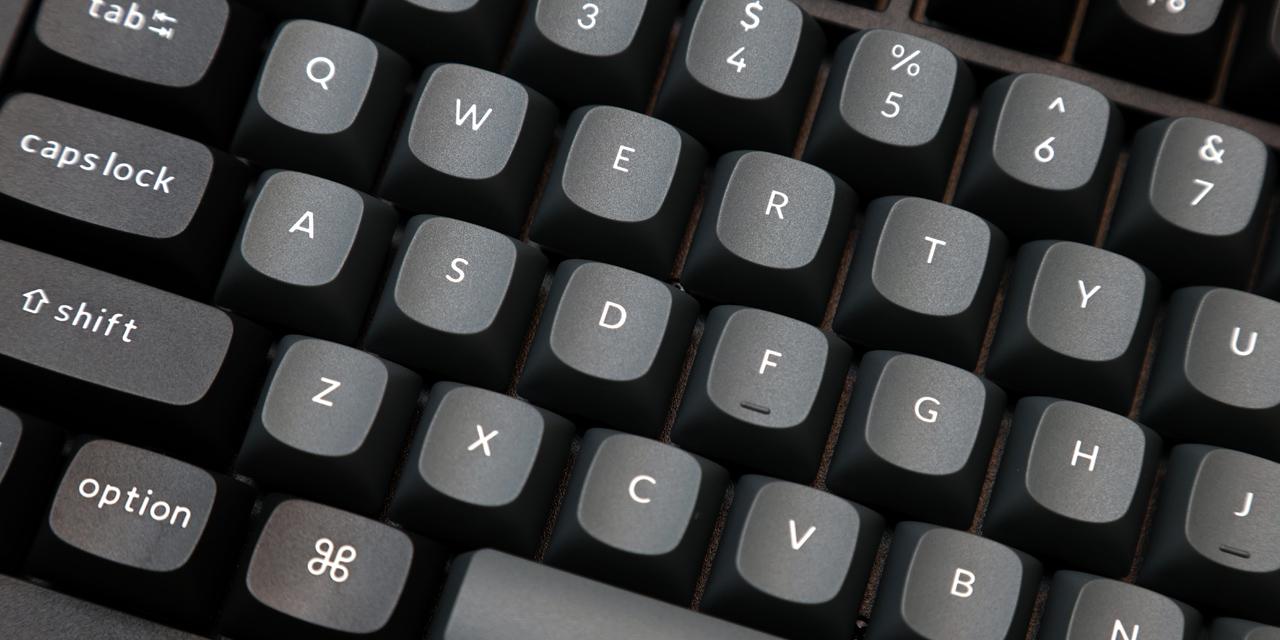
Turtle Beach, formerly ROCCAT, keyboards have always stood out for a handful of shared characteristics, especially with their Vulcan lineup, but the Command Series KB7 and KP7 are different. Starting from the similarities, we have an island-style design with an exposed brushed aluminum back plate and elevated switches and keycaps. The Command Series has a dark gray finish and some brass-like highlights in the corner of the keyboard and the volume wheel of the keypad. On the other hand, there are some appearance changes too, including the use of more plastic framing elements around the keyboard, including the raised sides. There are plastic parts around the integrated screen too. Former Vulcan keyboards also have been more minimal in terms of extra keys, but the Command Series has a whole extra row above the function keys with four triangle buttons that mirror the shape of the Turtle Beach logo. I wish they kept all the extra buttons consistent with each other for a bit more cohesiveness. Branding is clear with a Turtle Beach logo on top, under the arrow keys cluster on the KB7, and under the zero on the KP7. All in all, both Turtle Beach Command Series KB7 and KP7 are designed very differently from its predecessors.
In dimensions, the Turtle Beach Command Series KB7 is anything but compact, especially when you consider it is a tenkeyless keyboard. It is 399mm wide, 174mm deep, and 31mm tall. With the feet extended, this height increases to 40mm. When you attach the included wrist rest, the depth increases to 256mm, which slots into the bottom with rubber tabs. The palm rest is made with rubber and is surprisingly secure. It is also the same as the one provided with the ROCCAT Vulcan II Max. The translucent design diffuses lights that emit out the bottom for a neat effect. As for build quality, the Command Series KB7 flexes if you press hard enough in the middle, but it generally is passable. The plastic sides are not exactly the most premium in look, but it feels strong. The Turtle Beach Command Series KB7 weighs 858g by itself and 1120g with the palm rest attached.

Our Turtle Beach Command Series KB7 is in the standard North American QWERTY ANSI layout in a tenkeyless format. However, we do not have the standard eighty-seven keys due to the inclusion of a touchscreen on the right side. The bottom row is typical spacing with 1.25U keys on both sides of the space bar. There are a handful of secondary functions, and these keys are marked with their respective functions underneath. These are executed by pressing the Fn key on the right side, followed by the respective key. The majority of the secondary functions are found on the function row and replace the keys that normally would be found above the arrow key cluster. The only one unique to Turtle Beach keyboards is Fn + Caps Lock, which is used to activate Easy Shift. It also swaps the primary and secondary functions on the function row.

Above the arrow keys cluster, we have a large 4.3" touchscreen. It turns on with the keyboard and is both bright and responsive to touch actions. The user interface is basic, but navigation is intuitive with swipes or button presses to navigate between menus. The interface has three primary menus. By default, there is a menu for the standard nine keys, number pad, and a set of other shortcuts. The layout and functions of each menu can be modified using the Swarm II application, but you will always have three pages to swipe through. There is one more page on the far left that is used for volume levels on an overall and per-application basis, but you need to have Swarm II running in the background. The indicator lights and other toggled modes are integrated into the screen as well. This includes indicators to show the standard Caps, Num, and Scroll, as well as the Game Mode indicator to disable the Windows key. It also displays when Function is pressed. If you swipe down from the top, you can see two more settings pages specific for the Command Series KB7. This includes changing the actuation point, enabling Turtle Beach's SOCD solution called ReacTap, rapid trigger, macro recording, remapping of keys, and LED lighting settings. Swiping over also lets you change the background color between the default one and an image you can load through Swarm II.

At the top, there is a volume knob and media keys. The volume knob is marked by Play/Pause, but this is not a mistake. Rather than a typical mute function when you click the knob, this activates Play/Pause, while turning the wheel increases and decreases the volume. There are standard Previous and Next Track buttons beside the knob, but it seems counterintuitive to change this knob press functionality. The four triangular buttons are used to toggle Game Mode, cycle through five user profiles, toggle your microphone mute, and toggle the backlights, respectively. The buttons are stiff and feel plasticky. Furthermore, the microphone mute only works if you have the Turtle Beach Swarm II app running.

At the bottom of the Turtle Beach Command Series KB7, there are two pairs of kickstands at the back to raise it to a more desirable angle. There are rubber pads around the keyboard and on the kickstands to keep them in place without sliding about. At the bottom is a label to indicate the product name and serial number. The base has a unique pattern of triangles in the middle for a nice finish. The back of the keyboard has a USB Type-C port and a Type-A passthrough port limited to USB 2.0 speeds. You can connect the KB7 with the USB Type-C to Type-C cable directly or use the splitter for two Type-A ports, but both need to be plugged in.
Typing on the Turtle Beach Command Series setup is good but unremarkable. Turtle Beach advertises these Hall effect switches to be fast, smooth, and have a long keystroke lifespan. From the feel, I can say it is smooth to press. However, the rest of the Command Series KB7 and its build make the typing experience less desirable. Keystrokes sound clacky, hollow, and generally unrefined. Rattling is common, especially when it comes to the keys with stabilizers. These keys are deeper in sound, but they have a crude feel. Bottoming out each key is not satisfying either. All in all, these keys are more than usable, but they are not memorable either.

Lighting on the Turtle Beach Command Series devices is one thing that I appreciate, especially when we have Turtle Beach's AIMO lighting that always captures my gaze more than the standard lighting effects. From a physical sense, all the lights are north facing, which means they sit above the switch. The switch bodies are clear and therefore do not block the light from shining through. The lights illuminate the keycaps and their legends well, although anything written on the bottom row of the keycap is not as illuminated as the top. There are secondary functions to change the backlighting, and they are found on the arrow key cluster. Up and down arrows will increase or decrease the backlighting, while left and right arrows will change the effects. However, the left or right arrows never functioned for me. Changing the backlighting and effects of the keypad can be done with the four macros by default, although these can be reassigned in the software. The lighting levels are only synchronized between the two devices if Swarm II is active.

We have reviewed many Turtle Beach products in the past, so it is no surprise we are using the Swarm II software. Swarm II is available from Turtle Beach's website as an 82.2MB compressed executable, which is a bit larger than what we have seen in the past. I received several updates during my review, both software and firmware, so I know Turtle Beach is constantly fixing their products.
Once you select the keyboard, you will see five total sections on this scrollable page. The first is where you can change the display of the touchscreen. It shows you the three different pages to modify and the different functions you can add as a button for the screen. Each screen is laid out in a 3x4 grid, although there are some widgets that are larger than a standard 1x1 icon. There is a good set of functions available, including the standard keyboard functions or number pad that normally would be in this area, as well as some Swarm II widgets for things like monitoring metrics, opening applications, multimedia, and even third-party integration with apps like Discord, Steam, Counter Strike, OBS, and Streamlabs. You can make changes directly to the current screens, but you can also create and apply templates. There are more settings in the cogwheel, including the ability to change the screen brightness, show battery indicators for other Turtle Beach specific peripherals like headphones or mice, the screen background, and changing the volume mixers.

Further down, there is a page for standard analog functions that can be set for the primary, game mode, and Easy Shift layers. First, you can set a global actuation point for each layer or set it on a per-key basis. In the game and Easy Shift modes, you can create rapid trigger and Turtle Beach's SOCD solution named ReacTap. There are menus for multiple input and controller settings, but they are not currently implemented. Turtle Beach warns against using ReacTap for competitive gaming, as it can get you flagged for cheating and possibly banned from certain online games. The next page is for reassigning keys, again for the primary, function, game mode, and Easy Shift layers. The fourth page is for illumination, which allows for customizing up to a per-key basis. The last is to show the current firmware and settings for the keyboard.
Page Index
1. Introduction, Packaging, Specifications
2. A Closer Look - Keyboard Hardware and Software
3. A Closer Look - Keypad Hardware and Software
4. A Closer Look - Disassembly and Internals
5. Conclusion