Page 2 - A Closer Look - Hardware and Software

Just from unboxing the be quiet! Dark Mount Silent Tactile, you can easily tell that it is a highly modular mechanical keyboard designed for comfort, versatility, and customization despite only being available in black. The brushed black aluminum top plate pairs well with the ARGB LED lights and contributes to the overall clean, shiny look, although I did find a few stubborn grease stains on the plate when I first unboxed the keyboard. Furthermore, the black matte keycaps on top of the translucent switches provide an overall strong contrast with the shiny aluminum plate. Right above the USB Type-C port connection of the keyboard, the be quiet! logo is distinctly labeled in reflective black font. The accompanying number pad follows an identical design, with the addition of eight transparent hot keys. Attached to the top left side of the keyboard lies the multimedia dock. It has a plastic scroll wheel that controls the volume in discrete steps. As you will see in the photos later, the multimedia dock can be easily detached and reattached to the other side of the keyboard. It has a similar matte look as the keycaps, so it merges well with the overall look. The Dark Mount Silent Tactile also comes with graphite black wrist rests, which are sleek, cushioned, and attach magnetically for effortless alignment. It offers a soft, supportive feel reminiscent of memory foam, although the exact material is not specified. The final assembled keyboard also has some magnetic covers that need to be removed and are shown at the bottom of the photo. They have a very sleek design, interchangeable, and consistent in design between the number pad and the keyboard, so you do not have to worry about mixing them up. Overall, I found the design of the keyboard to be both modularly distinct and visually cohesive.
Without the palm rests, the keyboard takes up 174 by 456 by 52 mm of desk space and weighs 1.38kg, which is moderately heavy and taller than most full-size keyboards. It ensures that your keyboard will not budge anywhere while it is in use, and quite a reasonable weight given the aluminum top plate. If you have more desk space to spare, the keyboard dimensions with the palm rests are 256 by 456 by 52 mm, and it weighs a total of 1.59 kg. The Dark Mount Silent Tactile is not very portable, but its sturdy size was made to fit on most desks.

The Dark Mount Silent Tactile is available in ANSI and ISO standard layouts. The layout I am personally reviewing is the US ANSI layout, which has a total of 104 keys, excluding the eight customizable display keys on the numpad. The other purchasable layout choices are DE ISO, US ANSI, UK ISO, and FR ISO.

The Dark Mount Silent Tactile also has some embedded secondary function hotkeys that operate straight out of the box without the IO Center software. By holding the Fn key, the right and left arrow keys cycle through the ARGB patterns, while the up and down arrow keys adjust the brightness. Pressing the Fn key and the pause key together will enter game mode, which by default disables the key combinations Shift + Tab, Alt + F4, Alt + Tab, and Windows key. Finally, the keyboard can be reset to factory default by holding the Fn and R keys for 5 seconds. There are no default secondary functions for the numbered function keys.
As noted, modularity is one of the Dark Mount’s strongest points. The number pad can be mounted on either side or removed entirely when desk space is limited. Attaching it is simple thanks to magnets that guide the USB Type-C connection, although detaching it can feel slightly sticky. The number pad’s eight customizable Display Keys further enhance functionality, letting you launch apps, execute macros, or display custom icons.
In the photo above, you can also see the multimedia dock, which is more than just a cluster of dedicated buttons. It can also act as a small control hub, circumventing the need to open the IO Center software every time. You can adjust ARGB LED lighting profiles and keyboard brightness, or see the media player displaying album art, track titles, and playback progress. It should be noted that the Dark Mount Silent Tactile can only support one media dock at a given time. Just like the number pad, it also attaches to the main keyboard through a USB Type-C port.

The bottom of the Dark Mount Silent Tactile is made of ABS, or acrylonitrile butadiene styrene, plastic. It helps with overall weight and sound of the keyboard due to its flexibility, which allows it to absorb some vibrations. At the center, there are grooves that create a stripe pattern. Additionally, there is a total of nine rubber pads distributed at the four corners of both the main keyboard and the number pad, with the ninth pad on the bottom middle edge of the main keyboard to ensure that the entire keyboard does not slip while typing. On the top corners of both the keyboard and the number pad are magnetic pads that have a stackable design, allowing users to effortlessly adjust to three typing angles of 3°, 6°, or 9°.
The Dark Mount has a 2m USB Type-A to USB Type-C cable and can be connected to the keyboard through the USB Type-C port found on the top side edge. To take full advantage of the featured adjustable poll rate of 1000Hz and the full NKRO, or N-Key Rollover, you would need to connect the keyboard to a USB 3.0 Type-A port on your system. After all, it is not a wireless keyboard.

Typing on the Dark Mount is a significant upgrade over typical office keyboards. The keys are noticeably quieter. Vigorous typing or gaming still produces some audible clicks, particularly from the space bar. The tactile switches have a light, low-resistance tactility, paired with a fast spring return and a firm bottom-out that provides precise feedback. To test the keyboard’s sound dampening, I stood about half a meter away while a friend typed with varying force. When keys were pressed moderately, I could barely hear the sounds. I had to actively listen to notice them. Overall, the typing experience feels premium and responsive, with switches that deliver satisfying feedback for both gaming and productivity.

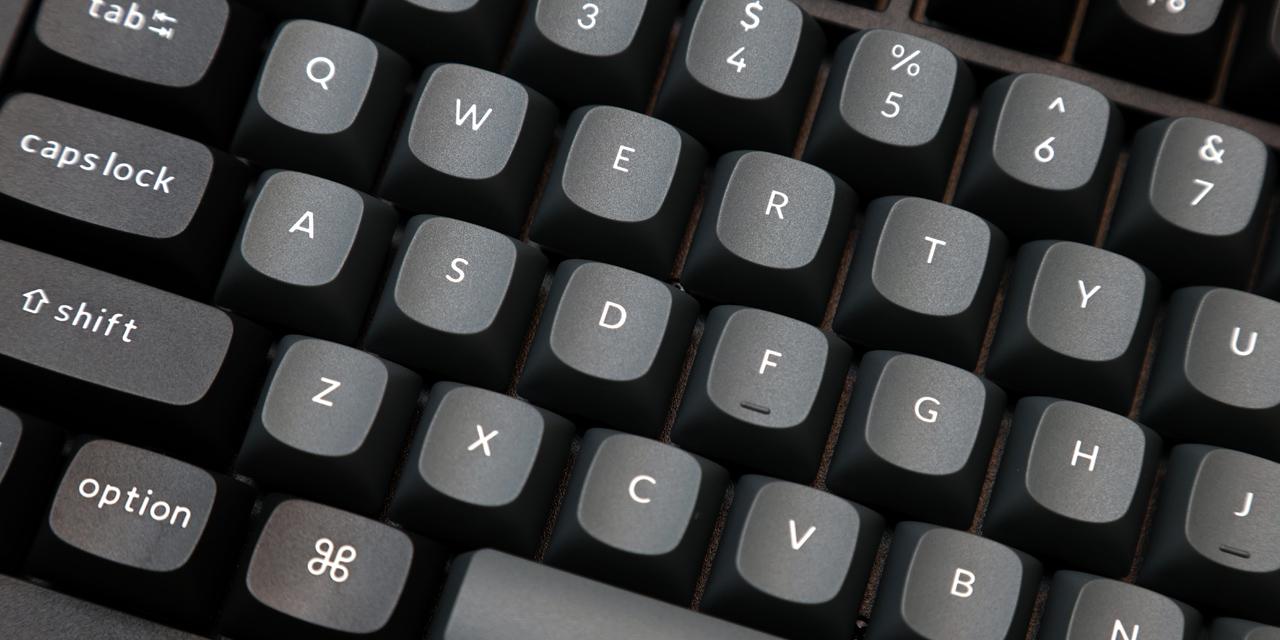
Lighting is another standout feature of the Dark Mount Silent Tactile. Each PBT double-shot keycap, designed with translucent legends and an arched diffuser, provides durability and excellent light diffusion. Additionally, each key has an individually programmable ARGB LED, complemented by a surrounding light bar that adds ambient illumination. While lighter colors such as yellow and white appear slightly less saturated than turquoise or neon green, the overall diffusion remains consistent. I currently use reactive lighting, where keys briefly change color when pressed.

Shown above is the be quiet! IO Center software, which I found to be quite intuitive and responsive. It automatically detects the keyboard and lets me modify lighting, macros, and display keys in real time. While the software is minimalistic and lacks a search feature, it includes tutorials on the manufacturer’s website and YouTube, making it easy to learn all the functions.

The IO Center Software has four main pages, which are Illumination, Key Binding, Media Dock, and Product Settings. First, in Illumination, there are six preset ARGB patterns, with most patterns having options to adjust speed and brightness. Most patterns have single, dual, or gradient colors. In the Custom tab, IO Center supports up to seven pattern layers, where you can select any number of keys or ARGB lighting zones and program it to a preset pattern. This allows for very creative color patterns and an enjoyable customizing experience.

In the Key Binding page, the keys can be remapped on the Remap tab to a variety of functions. Apart from the default function and the option to disable the key, there are ten categories of functions to choose from, which are standard key, media, mouse, open file or start application, open folder, open URL, Windows shortcut, profile, backlight, and macro. Macros can be set in the Macros tab. Fn Layer allows you to set the secondary functions of keys. However, secondary functions for the keys R and Pause are reserved and cannot be remapped.

In the Media dock page, there is a total of three unique options, which are Menu Color, Idle Graphic, and View. Idle Graphic allows the user to choose when the idle screen appears. View allows the user to switch between an idle image or a clock, and when to turn off the screen when in idle.

Finally, the last page in the software is Product Settings, where you can update firmware, reset the keyboard to factory settings, reprogram the keyboard to a different layout, and toggle what key combinations are turned off when game mode is active. The five key combinations for game mode are preset, so no new ones can be added. Overall, IO Center provides full control over the keyboard’s advanced features while remaining minimalistic and user-friendly.
Page Index
1. Introduction, Packaging, Specifications
2. A Closer Look - Hardware and Software
3. A Closer Look - Disassembly and Internals
4. Conclusion