By: Jonathan Kwan
June 19, 2026
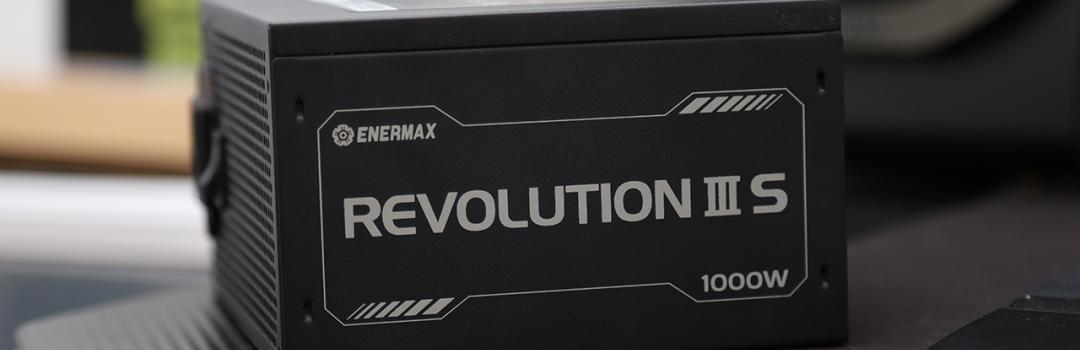
How does progressing through different stages of life look to me? I see it as a combination of joy, nature, and force. The reason why I say this is because I have always been satisfied with where I am, but moving to the next stage is natural, and on a number of occasions where it was not, I needed some force to drive me that way. For example, I enjoyed every grade in grade school, but structure required me to move to the next grade. I like the university where I did my undergrad, and I even completed my grad school there, but I ended up working in the corporate world rather than in pure academia mostly as an accident. I love my parents and living at home was great, but I got married and moved out. I love hanging out with my wife one-on-one, but we just welcomed our first child last month, and it was an amazing, if not hectic, addition to our lives. As humans, we have to embrace change, because even if you do not, the world around you will. Such is the same for companies. I remember when I first started getting into the computer scene around the year 2000, and ENERMAX was one of the biggest brands in the industry. They engineered their own PSU platforms, and were frequently recommended as a top-tier brand in enthusiast forums. They fell behind in 2010s, struggling to keep up with the market as the industry moved forward. Today, they are a brand that carries strong legacy value, but outsources their engineering to other OEMs and focuses on the midrange market. Is the latest version of ENERMAX competitive? Let us find out more with the Revolution III S 1000W power supply unit.

Our review unit of the ENERMAX Revolution III S 1000W arrived in a medium-sized brown corrugated cardboard box from the company's American headquarters in Chino, California, USA alongside the ENERMAX PlatimaxII 1200DF 1200W, which I looked at last month. Using FedEx International Connect Plus, our Revolution III S arrived in excellent condition to us here in Calgary, Alberta, Canada for our review today.

Inside the shipping box is the ENERMAX Revolution III S 1000W's retail box. The environmentally friendly -- or economically friendly, depending on your perspective -- brown corrugated cardboard box has ENERMAX's logos printed in red ink in the top left corner. Across the bottom, a printed black band has the Revolution III S branding in silver, 1000W output rating, and an array of three badges indicating its 80 Plus Platinum certification, ATX 3.1, and PCIe 5.1 compliance. A drawing of the power supply in three-quarter view is on the right. At the back, there are more feature highlights, cables and connectors table, and a specifications table. The remaining sides have the Revolution III S branding, and one side features a checkbox indicating the color of the unit inside.
Before we move on, let us take a look at the specifications of the ENERMAX Revolution III S 1000W, as obtained from the manufacturer's website:
80 PLUS Efficiency: Platinum
Modular: Fully modular
Cable type: Mesh-Sleeved Cables
Total power (W): 1000
Input Voltage (V): 100-240; 200-240 (for China only)
Input Current (A): 15-8; 8 (for China only)
Input Frequency (Hz): 50-60
Fan size (mm): 120
Operating temperature (°C): 40
MTBF (hours): >100K
Protection: OVP, OPP, OCP, SCP, OTP, UVP
Dimension (D x W x H), (mm): 140 x 150 x 86

The ENERMAX Revolution III S 1000W's retail package can be opened by a flap along the bottom. Upon opening the box, you will find everything neatly organized inside. The power supply is securely clipped between two foam brackets. Out of the box, you will receive the Revolution III S power supply itself, modular cables and AC power cable in a clear plastic bag, four screws and four zip ties in a resealable plastic bag, and a product manual. The bundle is minimalistic, but everything is presented well and appropriate for a PSU of this class.
Page Index
1. Introduction, Packaging, Specifications
2. Physical Look - Outside
3. Physical Look - Inside
4. Minor Tests and Conclusion