Page 3 - Physical Look - Inside

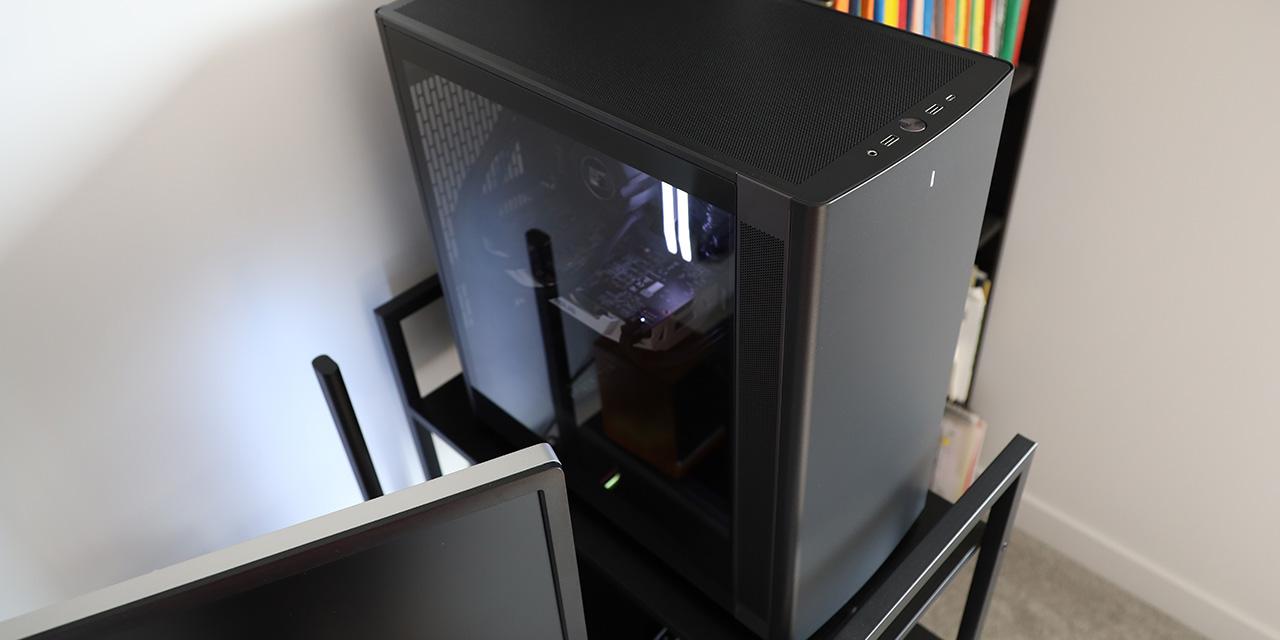
Removing the side panels of the FSP M580 is a straightforward process. The glass is held to the case with some metal rails and pegs that slot into the steel frame. The easiest way to remove it is to pull on the glass at the front and push on the exposed edge on the back. This will release the front pegs and allow you to slide the pane off the side and out the frame. I found it to be a bit risky every time, since the rail does not hold the glass in place once released and could easily drop without care. There is also no rubber or foam padding between the glass and the steel frame, which means we have two hard surfaces knocking on each other. Thankfully, there is a small air gap when the glass is installed. If you want, you can also screw in the glass panel, as there is a small mounting hole underneath. The glass has a black frame around the edge so you can hold it without leaving visible fingerprints. It is also slightly tinted. The right-side panel is as standard as you might expect, but again I would have appreciated captive thumbscrews, especially for a modern computer case.
With the panels off, you can see the internal layout of the FSP M580. The case is an open concept design with a single compartment and open air from the front to the back. With the solid glass on the front, the air can come in on the right-side and out the back. The only permanent division is to hold the motherboard, and this splits off the power supply and your cables from the rest of the hardware. The main area of the FSP M580 is where you can mount up to an ATX motherboard, with support for micro ATX and mini ITX boards too. Internally, everything is the same black color except for the fan blades, which are meant to disperse the ARGB lights underneath. The black paint on the steel panels is applied evenly and does not scratch off easily.

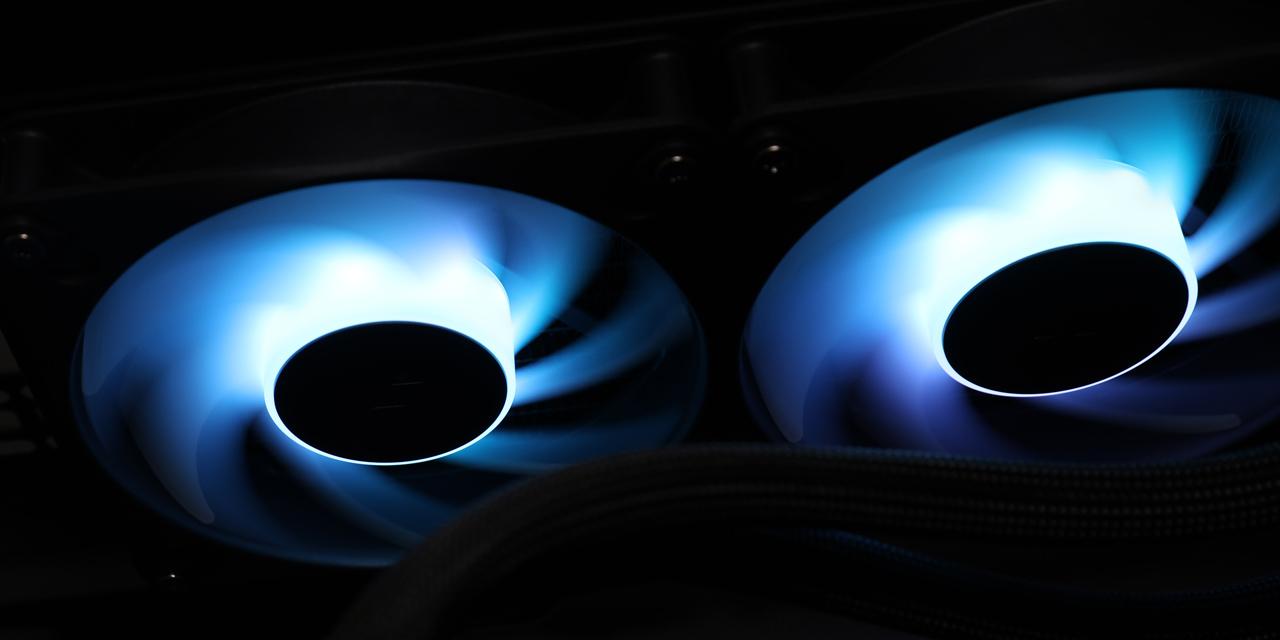
In the back corner, the first thing I would point out is the large opening under the motherboard area. This is useful when installing third-party coolers, as you can change the mounting mechanism while keeping the motherboard installed. FSP specifies a maximum height of 160mm for a CPU cooler here, which will only be a restriction to some larger air options. There are multiple openings above the motherboard to route cables here. These holes support back connectors on motherboards from all the major motherboard manufacturers. At the top, there are rails to install cooling options. FSP specifies support at the top for three 120mm fans, two 140mm fans, or a radiator up to 360mm in length. Due to the wider enclosure and spacing, you should be safe in putting up a 280mm radiator too. At the back, there is a spot to mount a 120mm fan, but one is already included. Unfortunately, FSP has not given us any specifications for these fans, but they are 25mm thick and have addressable RGB lighting in the hub and around the edges. They also have a nice mirror finish for an "infinity" like look in the center and on the frame.

Down the back to the bottom, there is a total of seven expansion slot covers, which is typical for a mid-tower enclosure. There is no support for vertical mounting on the FSP M580. At the bottom, there is an opening with rails to mount fans, including up to three 120mm or a radiator up to 360mm in size. There are no mounting rails for 140mm options, however. At the back, there are more routing holes to pass through cables at the bottom, such as the front I/O or video card power. Otherwise, this area is quite bare.

The front of the FSP M580 is fully exposed with the open area translating into a clear view inside the case. At the front, there are three more 120mm fans with the same design as the rear fan. However, one noticeable thing is that they are all mounted in reverse so that the air comes through this way. This is a nice aesthetic design choice from FSP, as it means we do not have any arms obstructing the lighting of the fans. Otherwise, you can mount three 120mm fans or two 140mm fans. However, due to the limited extra height, you cannot install a 360mm radiator on the side. Further back, there are more holes to lead cables between the two compartments of the M580. Unfortunately, we do not have any rubber grommets here, which means you should be careful when it comes to hiding cables behind the motherboard. One thing I would have liked to see here is an integrated video card support bracket to help with carrying heavier GPUs. This is a common trend and an appreciated asset when I come across a case with one. There is about 445mm of clearance for expansion cards, which should be sufficient for even larger video cards.
On the bottom area, there are a couple of mounting holes so you can install a 2.5" or 3.5" drive. FSP notes in the manual that only one of the two options can be installed at a time. Also, if you choose a 2.5" option, you will need to remove the bottom fan, as it interferes with one of the mounting holes. Altogether, I would not use this area for drives, as it will interfere with the cooling capabilities at the front.

At the back, the FSP M580 is still in all black with cables to match. This includes a single header of front I/O pins, a USB Type-C header, USB 3.0 header, and front panel audio. These wires are flexible and easy to lead into place. The rest of the fans and their lights are connected to a fan controller. One thing I found curious was the lack of cable management, especially when it came to how FSP connected the fans to the controller. Wires were all strewn throughout and culminated in a mess of cables at the bottom. The placement of the fan controller does not help either. The rest of the back tray has several cable aids, including many cable tie anchor points. FSP has also included some Velcro straps in the accessory box to clean up bunches of cables. At the front, there is 40mm of space between the right side panel and the internal frame, while the back has 102mm of room. This is because the power supply will sit behind the motherboard and needs the space. There is up to 240mm of room for the power supply and cables. There are no damping materials where you would mount a PSU. We will see what our installation process is like later.
The rest of the drive support can be found on the back side of the FSP M580 with a single drive sled under the motherboard opening. It can accommodate two 2.5" drives at the front and a single 3.5" drive behind. It is held to the rest of the case with four screws, which makes removing the sled cumbersome. I would have appreciated FSP deploying a tool-less way to detach the sled for ease of use. In total, users can install up to two 3.5", three 2.5", or a maximum of four drives altogether.
Page Index
1. Introduction, Packaging, Specifications
2. Physical Look - Outside
3. Physical Look - Inside
4. Installation and Conclusion