Page 4 - Installation and Conclusion

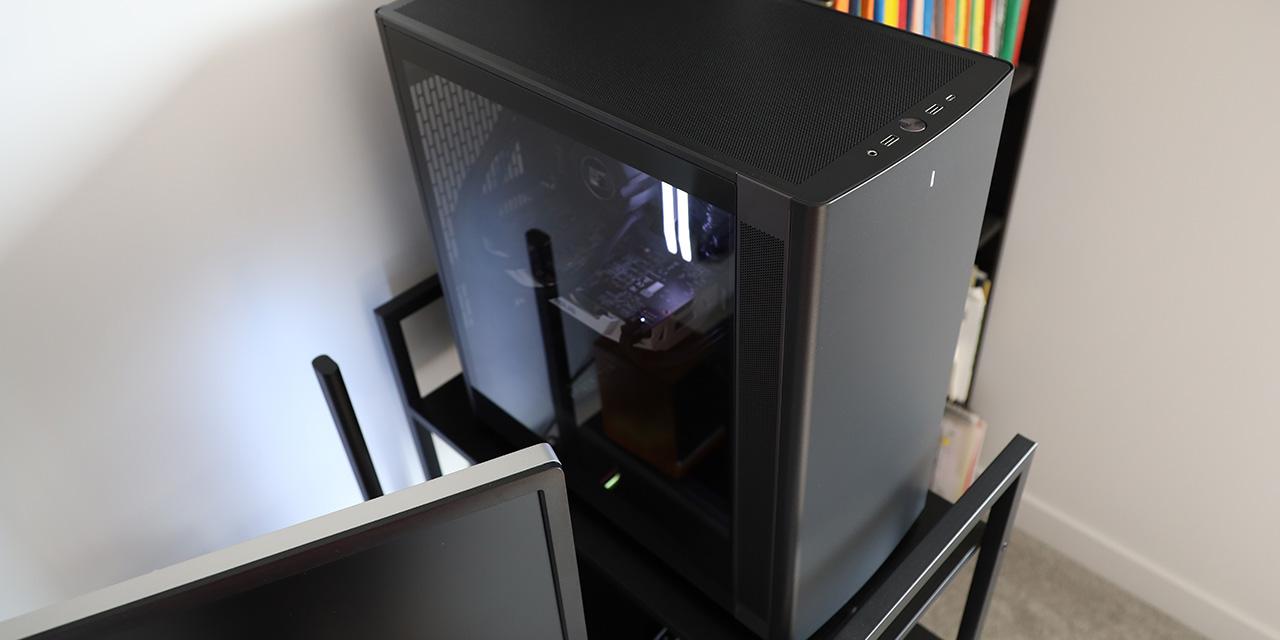
In the main area, I started by installing my motherboard. This is the necessary first step, as the power supply will undoubtedly block the back side of the motherboard, restricting backplate access for mounting cooling. Here, we have the Gigabyte GA-Z170N-Gaming 5 with an Intel Core i7-6700K and a pair of Corsair Vengeance LPX DDR4-3200 memory modules. I would have mounted a Noctua NH-D12L on top, which is 145mm tall, but I ran into issues with clearance on the back fan. Due to the small form factor motherboard, the NH-D12L is placed further back and in the way of the back fan. While this is not the fault of the M580, it is something to keep in mind if you have an mITX motherboard. So instead, I mounted a Cooler Master Hyper 411 Nano. FSP indicates a maximum 161mm height for the cooler, which is restrictive for larger air coolers. Next, I routed all the necessary wires and cables, including the front I/O, a SATA cable for my SSD, and the necessary power cables for the system. While I do not have an expansion card for this system, FSP specifies a maximum length 445mm graphics card, which is enough space for even beefier options.

Flipping to the back, I next installed my power supply, a Seasonic FOCUS Plus 850 Gold 850W in place. This unit measures 14.0cm in length. FSP specifies a maximum 240mm in length, which should be sufficient for even the larger units. Next, I connected the necessary cables for my system through the rest of case. I also used this time to tidy up my cables, but I did miss having a cable channel here, even with sufficient spacing, as this would organize the wires easily. Finally, I mounted a single Patriot Ignite 480GB on the drive cage and connected a SATA cable.

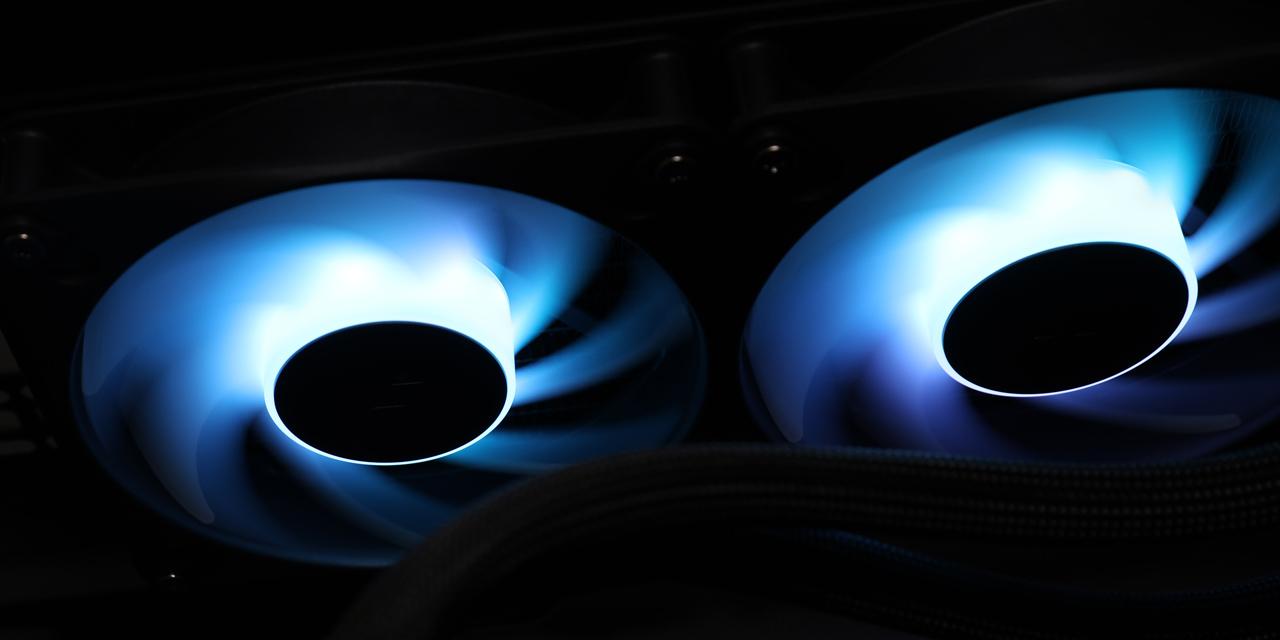
With everything installed, I powered my system on to hear and see things turned on. The fans spun to life and the vibrant colors from the ARGB fans were a remarkable sight. Using our standard APH Networks sound scale, where 0 represents silence and 10 indicates loudness, the FSP M580 is a 4.0/10 in the full speed turbo mode and a 2.5/10 in normal operation. As for noise suppression, the FSP M580 does not do anything to keep noise down, as there is no noise damping material. In terms of fan testing, when they were running full blast, I measured the four fans at 40.3dB(A) at a 50cm distance. The single 120mm fan produced a maximum airflow speed of 10.4km/h, or 6.5mph, directly at the outlet.
-----------------------------------------
The FSP M580 is another computer case in the highly competitive market, and it does do a few things to turn heads. For one, its 270° curved glass is quite pretty, especially in this price range. Its shorter nature is unique, even if it results in a wider body. FSP takes advantage of this aesthetic design with its mirror-finished four 120mm ARGB fans that glow and shine brightly. All the fans are nicely controlled by a fan and light controller for easy setup. Internally, it has a newer layout that has become more popular lately, and should fit most of your hardware, including two spots for 360mm radiators. When it came to installing my system in the M580, I appreciated the included plastic toolbox that easily defined the use for the different screws and other mounting hardware. The build process was however a bit of a mixed bag. I was able to get my system installed, but I had to make a few part compromises. For one, the space for air coolers is limited. Depending on your situation, you may need to swap out a fan for storage. I also miss some installation creature comforts like rubber grommets, a rear cable channel, or a GPU support bracket. I was not a huge fan of the power supply placement behind the motherboard, which will be annoying if you make any future changes to the cooling. There are areas to modernize, such as making the drive cage tool-less or using captive thumbscrews on the side panel. Finally, I would have liked to see an improvement in the way the glass sits on the M580, as it is a bit precarious to remove the panel. Some damping material between the tempered glass would also be appreciated. All these complaints are small on their own, but they are implementable without changing the design too much. At the time of the review, the FSP M580 is a bit difficult to find, but it has an MSRP for around $110 to $115 USD, depending on the color. This makes it accessible for most PC builders. I hope FSP can still implement some of these changes for their next revision, but the M580 is a decent computer chassis with some places to improve upon.

FSP provided this product to APH Networks for the purposes of evaluation.
APH Networks Review Focus Summary:
7/10 means Great product with many advantages and certain insignificant drawbacks, but should be considered before purchasing.
6/10 means A product with its advantages, but drawbacks should not be ignored before purchasing.
-- Final APH Networks Numeric Rating is 6.4/10
Please note that the APH Networks Numeric Rating system is based off our proprietary guidelines in the Review Focus, and should not be compared to other publications.
The FSP M580 is a short and wide mid-tower ATX computer case that turns heads with its 270° curved glass and four mirror-finished ARGB fans.
Page Index
1. Introduction, Packaging, Specifications
2. Physical Look - Outside
3. Physical Look - Inside
4. Installation and Conclusion