Page 2 - Physical Look - Outside

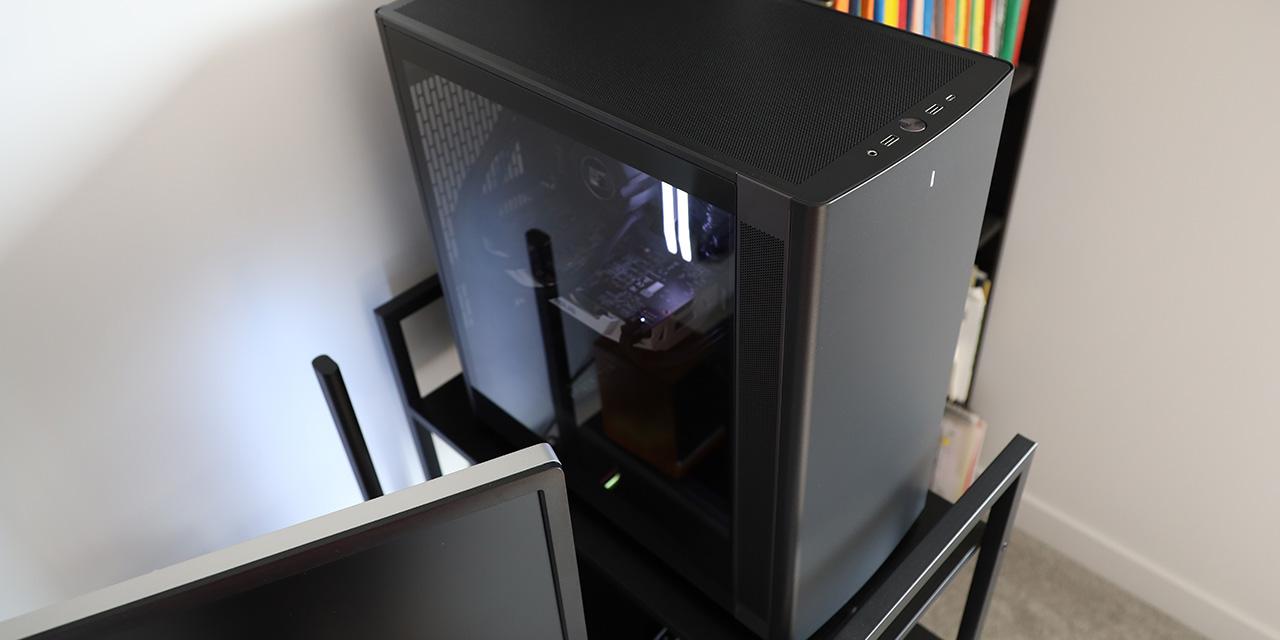
Most cases I have reviewed in the past have had typical relative sizes with a tall, deep, but narrow body. However, the FSP M580 changes these dimensions quite drastically. Like the Antec C5 ARGB, thebe quiet! Light Base 900 DX, and the recently reviewed Fractal Design Pop 2 Vision, the FSP M580 is shorter and wider than most computer cases. This is due to a shift in the internal layout with the power supply positioned behind the motherboard instead of under. As such, this removes the need for a power supply shroud that is typically found in the main area. Rather, the M580 uses a large, curved glass that combines the front and side panel to show off the primary system parts. This reduction and removal of any lines here make all your hardware easily visible with its full 270° view without any lines or breaks in visibility. It is great to see curved glass, as this is often reserved for higher-end enclosures. Otherwise, the rest of the chassis is black, but a white option is available too. Overall, I really like the design of the FSP M580, as it looks modern and a bit different than traditional cases.
From this angle, you can see all the materials found on the FSP M580. This includes a 0.7mm thick SPCC steel enclosure and the single pane tempered glass side and front. The frame feels well put together and the other steel side panel does not flex too much. These materials together translate into a light case at 7.5kg. This is likely due to its smaller overall size. With dimensions of 460mm deep, 285mm wide, and 398mm tall, the M580 is very squat and thick. It will take up a bit more room with its wider stance, but it still is what I would consider a small mid-tower ATX case.

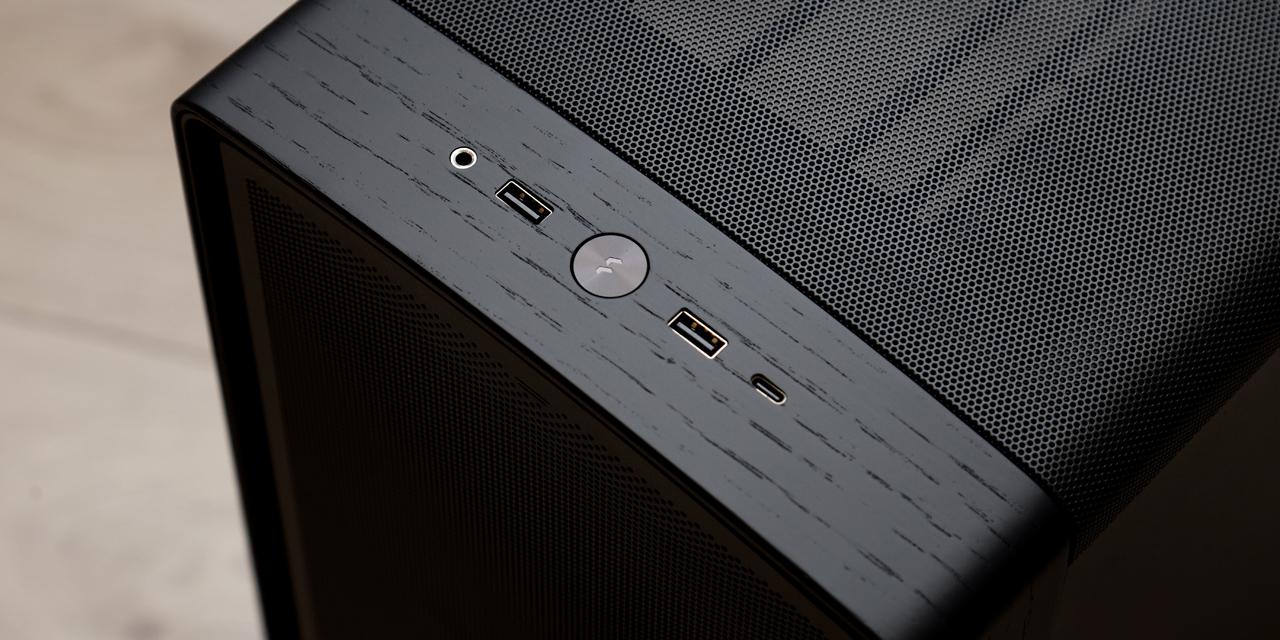
On the top, we have easily accessible I/O for the FSP M580. They are aligned in a single column on the right side. First, there is a square power button, followed by two pinhole LED lights for power and drive activity. Next, there is a smaller square to reset your system. There are two USB 3.1 Type-A ports that sit around two 3.5mm audio jacks for headphone out and microphone in. A single combination jack is more appropriate for modern cases. A single USB 3.2 Gen 2 Type-C port is the last port. Finally, there is a thinner rectangular button to control the RGB LED lighting of the controller inside, as you will see shortly. Next to the I/O, there is a thin plastic mesh covering the ventilation at the top. The mesh acts as a dust filter to prevent debris from falling above and it is held on with magnet strips. There is a small rubber tab on the end of the filter for easy removal.

On the other side of the FSP M580, there is a steel panel with two columns of ventilation holes. This allows for air to flow in and out for the front fans and the power supply. This pane is attached to the rest of the case with standard thumbscrews, but I would have liked to see captive ones instead. At the back, there is a large opening on the left side for the power supply. You can mount a standard size ATX unit here. Next, we have an opening for the motherboard I/O, followed by a single fan output area with a 120mm fan mounted inside. Underneath, there are seven expansion slots, which are all perforated for airflow. They hold to the case with standard screws, plus an additional metal plate that helps with extra security.

Underneath everything, the FSP M580 has a few other areas to note. First, there is a mesh filter at the bottom that is held to the case with magnets. In each corner, there is a foot to raise the rest of the case up. Each foot is lined with padding to keep the whole chassis in place and reduce vibrations between the case and the surface it sits upon. The feet raise the FSP M580 off the surface by 17mm, which should allow for some air to flow through the bottom.
Page Index
1. Introduction, Packaging, Specifications
2. Physical Look - Outside
3. Physical Look - Inside
4. Installation and Conclusion