Page 4 - Conclusion
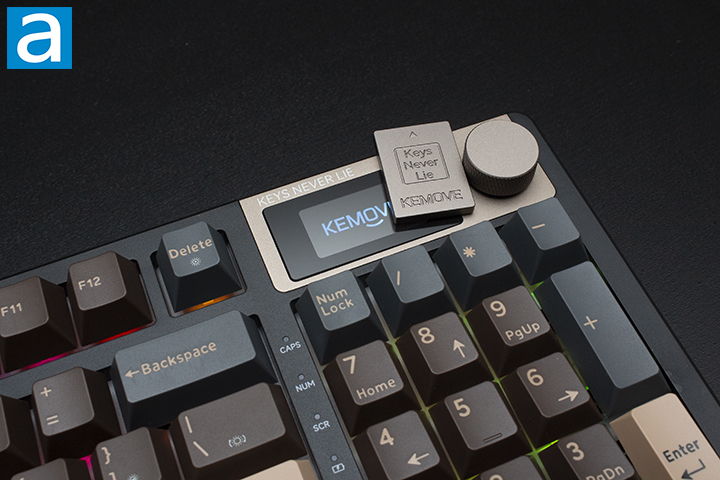
The KEMOVE K94 is a solid option when it comes to a wireless 1800 layout keyboard. The build quality is solid despite being made out of plastic. The appearance is nice, having a consistent Mocha Brown aesthetic across the double shot PBT keycaps. The typing experience is quite good, offering a solid linear typing feeling. Despite the keycaps not being shine through, the underglow provided from the RGB LED lighting is appealing, providing a humble glow. Something I really appreciated was the use of VIA as it is a solid open source software that can be accessed through a web application. Customization on VIA is very easy, especially when so many keyboards use it. The only issue I experienced was I could only get the K94 to work with the web interface and not the application. This KEMOVE keyboard boasts incredible battery life, at what the company claims to be 90 hours with the ights on from its two 4000mAh batteries. In my extended usage, I have no reason to doubt the claim. I will say there were some smaller issues I noticed, such as the screen never adjusting to my device’s time. The Jixian Blueberry is acceptable for a budget switch standard, but I did notice some roughness despite being pre-lubricated. At a price of $100 USD at press time, the KEMOVE K94 is a good choice for anyone looking for a wireless 1800 layout mechanical keyboard.
Epomaker provided this product to APH Networks for the purposes of evaluation.
APH Networks Review Focus Summary:
7/10 means Great product with many advantages and certain insignificant drawbacks, but should be considered before purchasing.
6/10 means A product with its advantages, but drawbacks should not be ignored before purchasing.
-- Final APH Networks Numeric Rating is 6.5/10
Please note that the APH Networks Numeric Rating system is based off our proprietary guidelines in the Review Focus, and should not be compared to other publications.
The KEMOVE K94 is a solid 1800 layout wireless mechanical keyboard that puts functionality at the forefront.
Page Index
1. Introduction, Packaging, Specifications
2. A Closer Look - Hardware and Software
3. A Closer Look – Disassembly and Internals
4. Conclusion