Page 3 - Subjective Audio Analysis
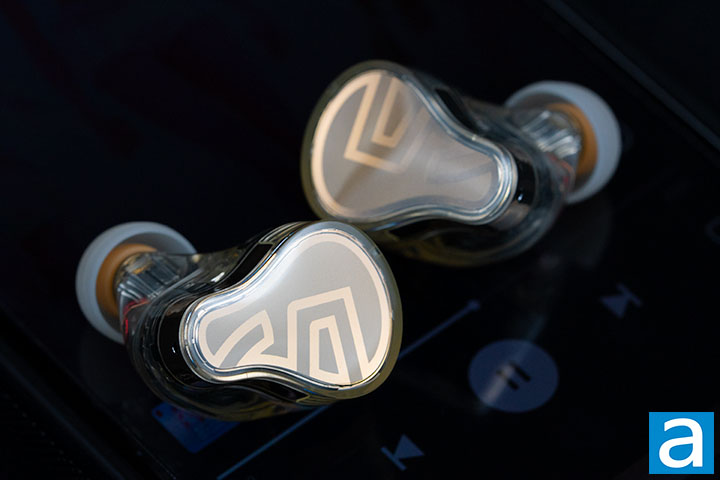
Reviewing audio devices requires highly trained ears, extensive experience, and sufficient technical knowledge. Even for the experienced evaluator, it may be difficult at times to accurately evaluate a product without using a reference product that they are thoroughly familiar with. Furthermore, the effects of false advertising and placebo may influence inexperienced listeners to be biased in their write-ups. While I am not going to even try to claim that I am the only trustworthy or best evaluator for sound, it is true that most audio equipment review sites have editors who are insufficiently trained. Any device they evaluate always tends towards the same "good bass, nice midrange, awesome treble, really clear sound, 10/10". While there are many knowledgeable audio reviewers at various respected online media outlets, they are by far the minority.
When it comes to audio devices, there are really no true objective measurements for sound quality. As the evaluator, I will put it through a series of subjective tests to try to come up with the most objective rating possible. Yes, it sounds like a paradox. All audio tests were performed using songs from Spotify with audio streaming quality set to lossless 24-bit 44.1Hz. The earbuds have well over 24 hours of burn-in, and were connected to my Pixel 10 Pro through Bluetooth 5.4 on LDAC for the test. I set the LDAC settings on my phone to 24-bit 44.1Hz to match Spotify. However, I had to set the bitrate to 660kbps/606kbps because my phone was experiencing connection issues at 990kbps/909kbps. From what I read online, the connection issue is likely caused by the Pixel 10 Pro rather than the SOUNDPEATS H3. Noise cancellation was turned on during testing, which can also affect the overall sound by providing a slight boost to the bass.
Starting in the bass range, this is the most emphasized region. The rumble of subbass sounds is strongly felt. Bass drum kicks are powerful, punchy, round, and clear. Both the pluck and vibration of bass guitar strings can be heard clearly. I personally find this strong bass range to be quite enjoyable, but it does cause some fatigue when I listen to bass-heavy songs back-to-back for extended periods of time.
The midrange of the SOUNDPEATS H3 is recessed. Brass instruments lose the warmth and richness they are known for, while vocals sound thin and dry. Claps also lack body, since their fundamental frequencies and lower harmonics are in this region. However, the tuning climbs back up to a peak at around 2kHz. The boost at this frequency makes the vocals sound clear, while adding brightness to the brass instruments that play in the higher octaves. The natural resonance of the wood used for pianos and other wood instruments can be heard.
I find the treble range to be rather interesting. Cymbals are bright and crisp. Similarly, the attack of claps is snappy and crisp, despite the lack of body. The high notes of violins have a nice sharpness without sounding piercing. However, the upper treble range sounds recessed, which causes vocals and some instruments to lack a bit of energy. A boost to this range would improve the sparkle of cymbals and the energy of the overall sound. A positive of the recessed upper treble is sibilances are well-controlled.
The soundstage lacks depth and width, which is expected considering the physical limitations of earbuds. Imaging is not very accurate due to the lack of depth. Both the frequency separation and layering of the SOUNDPEATS H3 are great. The sounds in all three regions are well separated and clear. Even when the midrange gets crowded, the sounds of the individual instruments can still be distinguished from each other. I find the overall musicality of the earbuds to be decent. Instruments and vocals are clear, but they lack energy. I also have a personal preference for a warm sound signature, which the SOUNDPEATS H3 lacks out of the box. However, the tuning can be changed through the EQ in the app to your preferred sound signature.
The SOUNDPEATS H3 comes with a total of five pairs of eartips, which should accommodate most people's ear sizes. Finding the correct sized eartip is important for both comfort and passive noise cancellation. I found the active noise cancellation of the earbuds to be quite good. When I am not listening to any audio, I can still hear some of the background noise. Once I turn on music, nearly all background noise is gone, except for particularly loud ones like weights dropping in the gym. There are four noise cancellation modes, but I only tested the adaptive noise cancellation, as I do not find it realistic for users to manually select noise cancellation modes during regular use.
Next up are the microphone tests. In the first audio clip, I was standing in my bedroom, where there was very little noise. As expected, the mics were able to pick up on my voice without any issues. In the second clip, I was walking around outside in moderately windy weather. The earbuds were able to reject the noise of my footsteps quite well, but it did pick up some of the wind noise. Nevertheless, my voice was still very clear compared to the noise level. In the last clip, I played some cafe background noise on my speakers to simulate a loud environment. I was quite impressed by the performance, since I set the volume to be much higher than what I usually experience in cafes during non-busy hours. In all the clips, my voice did not sound natural, but it is picked up very clearly, which is adequate for calls.
The SOUNDPEATS states the H3 has a playtime of 7 hours. During my testing, I turned the volume to 50% on standard aptX audio codec and got a playtime of 11 hours. The significantly higher playtime I got was likely due to me using a less intensive codec than what the earbuds are capable of. With the case, the playtime is said to increase to 37 hours. According to the manufacturer, the earbuds take 1 hour to charge, while the case takes 2 hours. The case is rated to have 2 hours of playtime for every 10 minutes of charging. The manufacturer does not provide a maximum Bluetooth range, but during my testing, I was able to get up to 74m line-of-sight. When connected to my phone, there was no noticeable lag while I was playing games or watching videos. When the earbuds were connected to my computer, I did notice a slight delay when I was gaming. However, once I turned on game mode, the delay was completely gone.
Page Index
1. Introduction, Packaging, Specifications
2. Physical Look - Hardware and Software
3. Subjective Audio Analysis
4. Conclusion