Page 3 – Physical Look – Inside

Opening the side of the Cooler Master COSMOS ALPHA reveals one of the more distinctive design elements of this chassis. Unlike many traditional tempered glass side panels that must be completely removed from the case, the COSMOS ALPHA uses a hinged mechanism that allows the glass panel to swing open like a door. This design makes accessing the interior much more convenient, especially when you need to perform quick upgrades or adjustments without having to carefully remove and store a large piece of tempered glass. The hinge mechanism itself feels very solid and well engineered, which is important considering the tempered glass panel is quite large and heavy. The sturdy hinge provides enough support to hold the panel securely while it is open, preventing the panel from feeling loose or unstable during use. When closed, the panel aligns cleanly with the surrounding frame, maintaining the smooth exterior lines of the chassis.
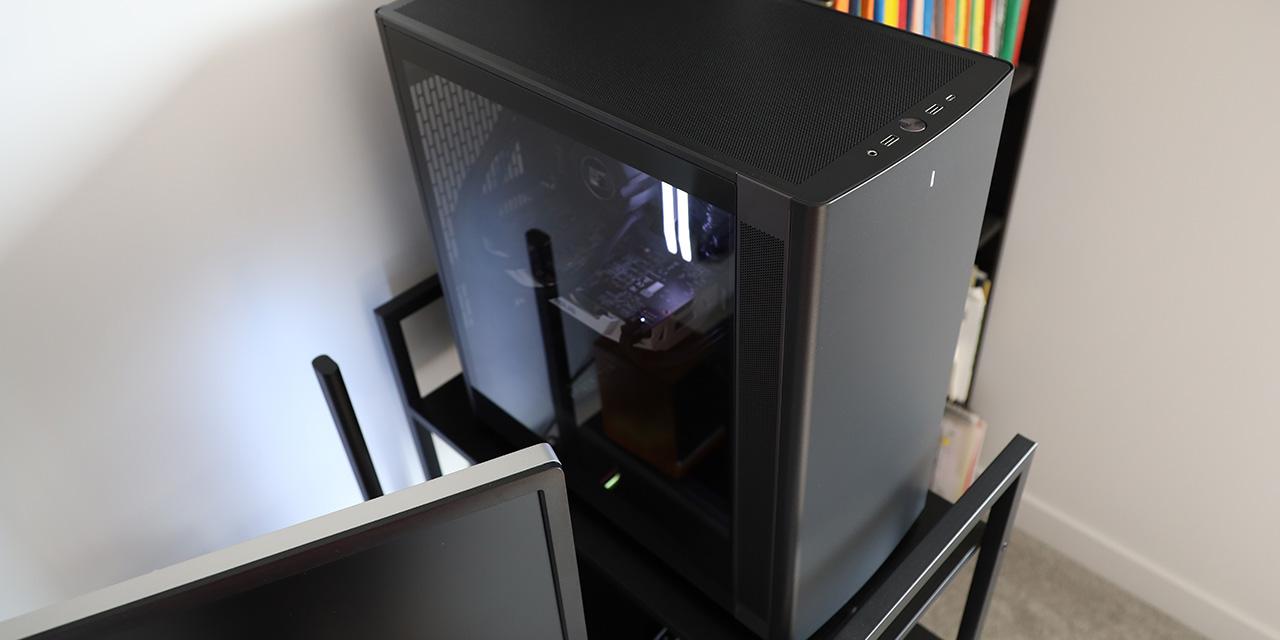
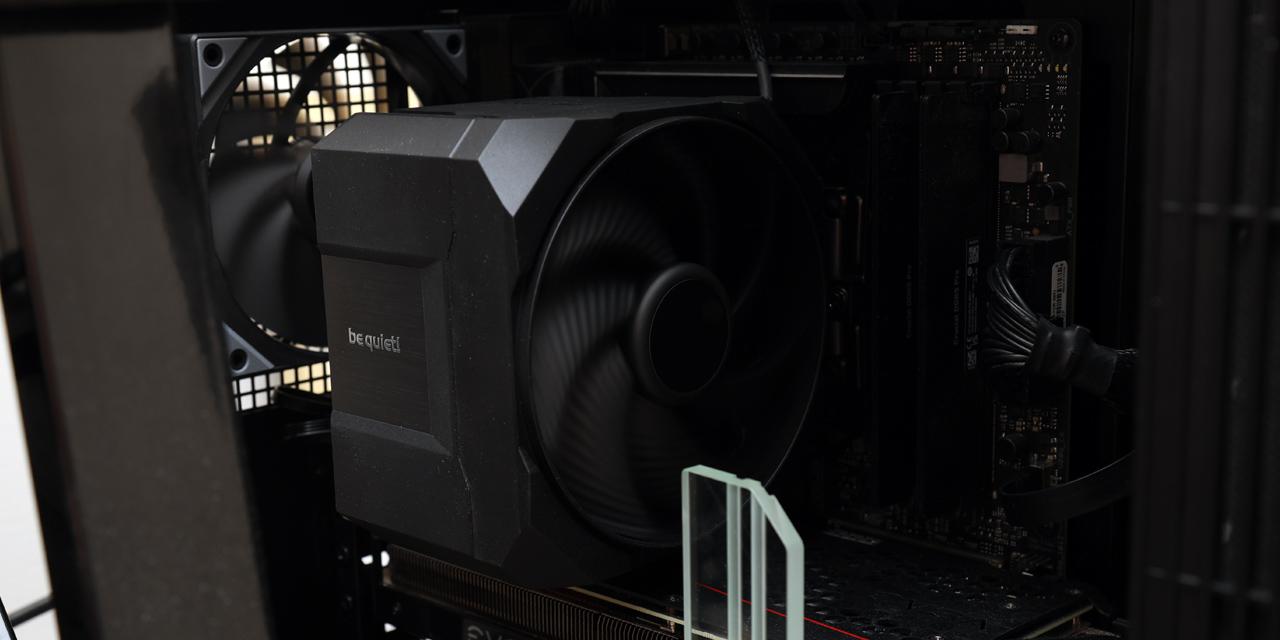
With the panel open, we can get our first look at the interior layout of the COSMOS ALPHA. As expected from a high-end enthusiast chassis from Cooler Master, the interior is finished in a uniform matte black coating that matches the exterior styling. The spacious interior layout immediately stands out, offering plenty of room for large motherboards, long graphics cards, and complex cooling configurations. Cooler Master also includes a GPU support bracket across the main chamber to help stabilize long and heavy graphics cards, which is a welcome addition for modern high-end GPUs. Overall, the internal layout appears clean, spacious, and clearly designed with high-performance builds in mind.

Looking at the rear section of the Cooler Master COSMOS ALPHA from inside the chassis reveals another unconventional design choice. On most tower cases, the rear exhaust fan is mounted directly above the motherboard I/O opening as part of the main chassis frame. However, the COSMOS ALPHA takes a different approach. Instead of placing the exhaust fan within the main motherboard tray frame, the rear fan is actually mounted slightly outside of the primary structure of the case. This design becomes more obvious when viewed from inside, as the fan sits behind a secondary mounting structure rather than directly on the rear frame itself. This layout leaves a very open area around the motherboard I/O section and expansion slots, which can make installation and cable routing somewhat easier compared to more crowded designs.
The motherboard tray itself supports a wide range of motherboard sizes, including Mini-ITX, Micro-ATX, ATX, E-ATX, and even EEB form factors, making the COSMOS ALPHA suitable for a variety of high-end system builds. As expected for a premium full-tower chassis, the motherboard tray also includes a large cutout behind the CPU socket area. This opening allows users to install or remove CPU coolers or water block backplates without needing to remove the motherboard from the case, which can save a significant amount of time during system assembly or upgrades.

Taking a closer look at the rear section from the outside gives us a better view of the exhaust cooling design of the Cooler Master COSMOS ALPHA. As shown in the photo, the rear fan is mounted on a dedicated bracket outside of the main chassis frame rather than directly above the motherboard I/O opening like in most conventional cases. The included rear exhaust fan is a 120mm Cooler Master Mobius fan, which is regarded for its balance between airflow and noise performance. Because the fan sits on a separate mounting structure, it allows the rear section of the case to remain relatively open and uncluttered inside the main chamber. Another interesting aspect of this design is the flexibility it offers for fan positioning. The mounting bracket includes multiple slots, allowing users to adjust the position of the rear fan vertically if needed. This could be useful when optimizing airflow depending on the cooling configuration inside the case. In addition, the surrounding mounting area provides space for installing additional fans, further expanding the cooling possibilities of the chassis. While this rear mounting arrangement is somewhat unconventional compared to traditional case designs, it gives builders more freedom to fine-tune their airflow layout and complements the overall modular philosophy behind the COSMOS ALPHA.

Looking behind the front panel of the Cooler Master COSMOS ALPHA, we can clearly see the two large intake fans that come preinstalled from the factory. These are 200mm fans, and they occupy most of the vertical space of the front mounting area. Thanks to the large open section behind the front mesh panel, there is very little obstruction to airflow. This design allows fresh air to move freely into the chassis, which is important for maintaining good cooling performance in a full-tower case designed for high-end hardware. The generous amount of space in this area also allows users to configure alternative cooling solutions if desired. The COSMOS ALPHA supports a wide range of fan and radiator options across multiple mounting locations, including the front, top, bottom, and side mounts. For builders planning a custom water-cooling setup, this flexibility makes it possible to install very large radiators without running into space limitations. Even with the default configuration, however, the two 200mm front intake fans should provide a strong airflow foundation for most builds. Additionally, the front panel itself can be easily removed when needed, allowing quick access to the fans for cleaning or replacement.

Opening the metal side panel of the Cooler Master COSMOS ALPHA reveals the backside of the motherboard tray and the main cable management area of the chassis. Similar to the tempered glass panel on the opposite side, this steel panel also uses a hinge mechanism rather than the traditional fully removable design. The panel can simply be swung open like a door, making it easy to access the cable routing space and internal mounting areas without needing to find a place to set the panel down. This design is especially convenient when making quick adjustments during system assembly. From this side, we can also see the modular layout of the power supply mounting area. Unlike many conventional tower cases where the PSU is fixed to the bottom of the chassis, the COSMOS ALPHA allows the power supply to be mounted either at the bottom or at the top section of the case. This flexibility gives builders more freedom when configuring their cooling setup, since the position of the PSU can be adjusted depending on how many fans or radiators are installed in the bottom or top sections of the chassis. For example, users who plan to install large radiators at the bottom may prefer to move the PSU upward to free up additional space.
The backside of the motherboard tray also provides a generous amount of room for cable routing. With approximately 53mm of clearance maximum behind the tray, there is plenty of space to hide even thick power supply cables. Several routing openings are available to guide cables to the front side of the motherboard area, helping to keep the visible portion of the build clean and organized. The overall layout appears well thought out, making cable management relatively straightforward even for complex builds with multiple drives and cooling components.
One particularly interesting aspect of the internal structure is that the motherboard tray itself is not fixed in place. Instead, it is mounted on a rail system that allows the tray to slide sideways within the chassis. This design allows up to 53mm clearance behind the motherboard tray while at the same time reduces the clearance on the other side of the tray. The large clearance behind the motherboard tray is not intended solely for cable management. While the large gap certainly makes cable routing easier, it can also be utilized as an additional cooling zone. Builders can install fans or radiators in this space, effectively turning the area behind the motherboard tray into a secondary cooling chamber. Thanks to the generous dimensions of the case, this section can even accommodate extremely large radiator configurations, including setups as large as 360 mm by 360 mm, which is something rarely seen in conventional tower cases. Again, due to the sliding setup, the only down side is that it is not possible to have both radiators and fans behind the tray and a graphics card mounted normally on the motherboard, it has to be installed vertically in that regard. Nonetheless, this flexible layout highlights the modular design philosophy of the COSMOS ALPHA, allowing users to prioritize either clean cable management or additional cooling capacity depending on their build requirements.
Page Index
1. Introduction, Packaging, Specifications
2. Physical Look - Outside
3. Physical Look - Inside
4. Installation and Conclusion