Page 2 - Physical Look - Outside

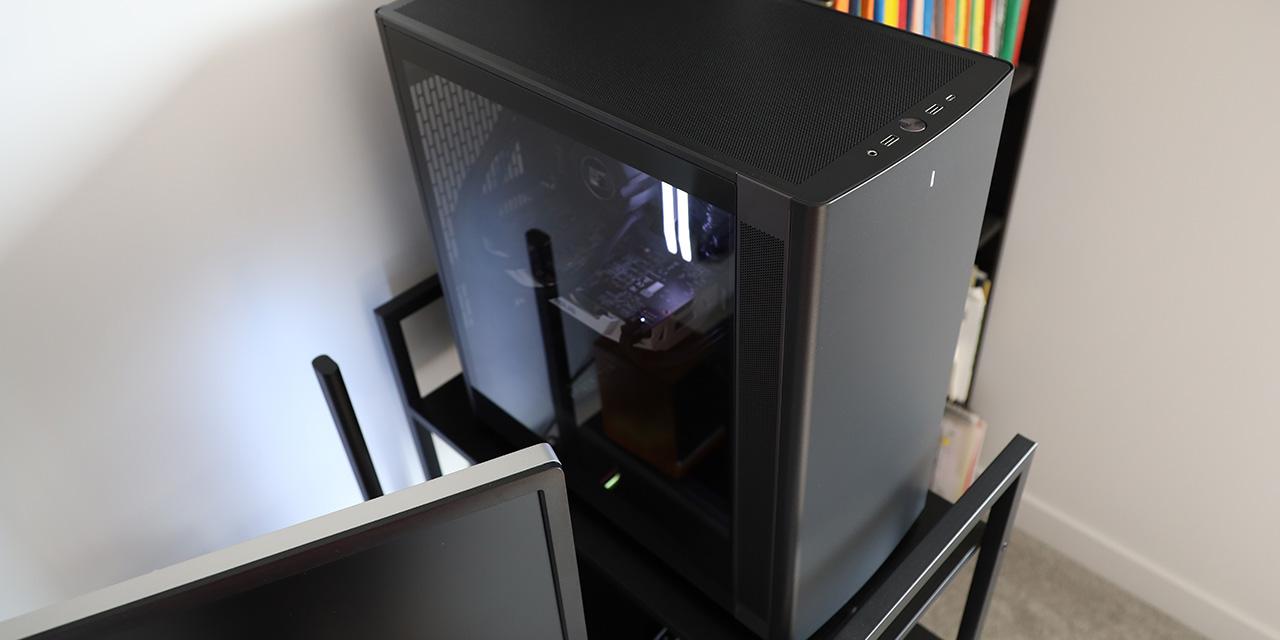
The Cooler Master MasterFrame 360 Panorama is different from the last Cooler Master case we reviewed, the MasterFrame 600, but there are some physical similarities. The MasterFrame 360 Panorama is like a fishbowl case, as you can see glass on multiple sides. You can see from this angle that the glass wraps around from one side to the other at the front. Its interior black color scheme is easily visible behind the panes. Cooler Master does a decent job of hiding its branding, as there is only one reference on the top panel. The overall shape of the MasterFrame 360 Panorama is both typical with its rectangular prism structure and atypical with the curvature. In some ways, it reminds me of a vintage fridge from the 1970s. One aspect that is like the MasterFrame 600 is the metal frame that is visible from the outside. There are no other colors of the Cooler Master MasterFrame 360 Panorama, which is unfortunate, but not surprising either. I do like the use of curved tempered glass for a less boxy design, which gives the MasterFrame 360 Panorama a bit more character.
The Cooler Master MasterFrame 360 Panorama is made of SGCC steel and tempered glass. SGCC is short for Steel Galvanized Cold Commercial, which is said to be more resistant to corrosion than the more typical SECC, or Steel Electrolytic Cold Commercial. This results in panels that are solid and do not flex or torque easily. These materials also contribute to the hefty 16.5kg weight. This is explainable given the amount of glass. As for dimensions, the Cooler Master MasterFrame 360 Panorama is 549mm in height, 291mm in width, and 581mm in depth. However, the feet at the bottom are removable. Doing so will reduce the height by 38mm. These measurements are reasonable for a full-tower enclosure.

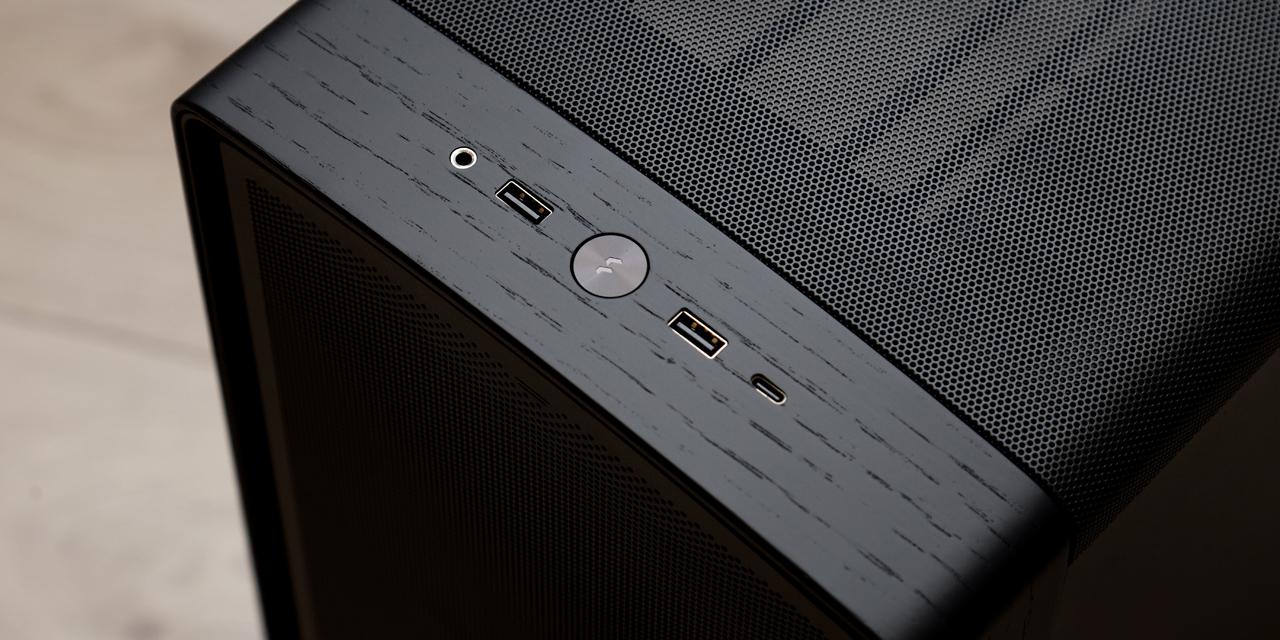
The top is where the user-facing I/O on the Cooler Master MasterFrame 360 Panorama resides. This area looks the same as the MasterFrame 600. These inputs and outputs are placed at the front in a row across the top panel. From left to right, we start with a power button and a pinhole opening for LED status lights. It glows blue on power on, and flashes red for drive activity. Next, we have two USB 3.1 Type-A ports, a USB 3.2 Gen 2 Type-C port, and a single combination 3.5mm audio jack for TRRS audio connections. Finally, we have a small reset button to reset the PC. Behind the row of I/O is a separate panel with many small ventilation holes. This ensures air can flow through the top region. As you will see, all these panels are held in with magnets to the frame of the enclosure.

On the other side, there is another tempered glass panel with the same tint, so that users can see through both sides. From here, you can see the whole case is divided into two halves by the motherboard tray. On the left, there is a large opening for an ATX-sized power supply. The rest of this side is perforated for airflow. On the right, there is a large slot at the top for the motherboard I/O with more ventilation holes. Interestingly, there is no place to mount a back exhaust fan, as the MasterFrame 360 Panorama is not wide enough on either side. This will have internal implications too, as you will find out later. Underneath, there are three expansion slots. They are vertical, which means you can only install one expansion card in this case. The slots are held to the rest of the case with standard screws.

Underneath the Cooler Master MasterFrame 360 Panorama, there are a few things to note here. In the middle is a large, perforated panel with many smaller holes. This steel panel acts as the filtration. Unfortunately, it is screwed in place and not easy to remove without flipping the whole enclosure on its side. This makes the bottom filter more difficult to clean. Bottom mesh filters are standard in most cases, and this feels like a downgrade to maintain, even if it looks nicer initially. In the corners, there are four feet to raise the MasterFrame 360 Panorama off the ground. They are easily removable by unscrewing them, but with the feet attached, there is an air gap of approximately 38mm. This should be more than enough space for air to flow through. Regardless, I would recommend putting your case on a flat and solid surface to ensure nothing inhibits the air.
Page Index
1. Introduction, Packaging, Specifications
2. Physical Look - Outside
3. Physical Look - Inside
4. Installation and Conclusion