Page 3 - A Closer Look - Disassembly and Internals

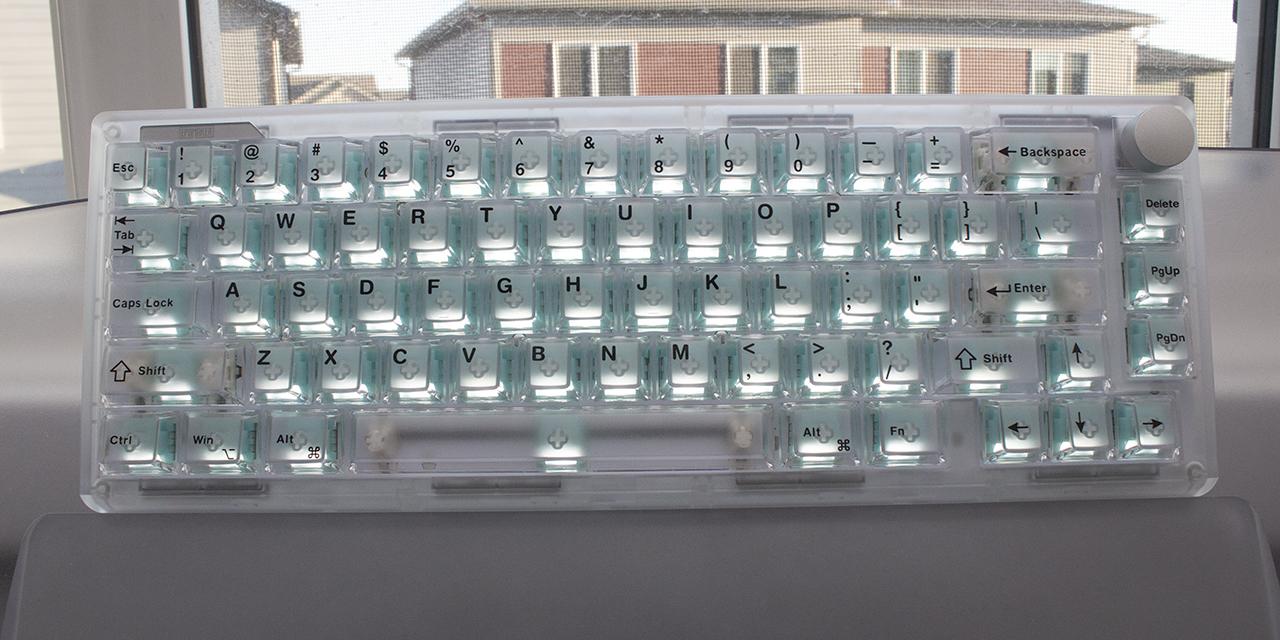
The disassembly process of the Epomaker Luma40 is quite simple. I started by taking off all the keycaps, as the screws can be found underneath them. This is true for all tray mounted keyboards. After removing the keycaps, you will now have access to the screws. Upon removing the screws, I pulled out the PCB enclosure out of the case. This disassembly process was quite familiar with many other tray mount cases I have worked with. It was a good experience to take apart. Upon exposing the interior, I was satisfied with the design. As this is a wireless keyboard, there is a nice cutout for the 1450mAh battery.

The interior design was adequate in my opinion. Taking a quick look, the design is quite simple. The Epomaker Luma40 is a tray mounted keyboard as aforementioned. There are not many things you can do to elevate the tray mount, but Epomaker did a good job by adding some foam underneath the PCB to add some extra sound dampening. The Luma40 also has a switch pad in the PCB enclosure. Foam usage in keyboards is quite important, so having access to this much foam is excellent. Aside from this, there is nothing to add. Some would argue a daughterboard would be good, but I personally think not having a daughterboard allows the keyboard to remain thinner.
The plate inside of the Epomaker Luma40 is polycarbonate or PC. PC is a very popular choice when looking for a deeper sound. This plate material will provide a nice “thock”. As an independent factor in the keyboard, the plate properties that affect its sound include its stiffness and density. To be more specific, we want the specific modulus or specific thickness, which is also known as the stiffness-to-weight ratio. The lower this number is, the more “thocky” this material will be for a keyboard. As of writing this review, I have not seen any material with a lower specific modulus than PC.

Upon closer inspection of the Kailh White Rain switches, I hope to provide you with more detail in the makeup of the switch. For the White Rain switches, the whole switch is made from polyoxymethylene, or POM for short. POM is known for its high stiffness, low friction, and excellent strength. Specifically, this material has a coefficient of friction of around 0.25 to 0.3, which is low when you consider this is a measurement on a 0 to 1 scale. As such, you can see why POM is so commonly used in switches. This switch is designed as a low-profile switch. This means the total travel is quite limited, being 2.8mm compared to the typical 4mm. The typing experience did not feel bad, even when comparing it to a regular mechanical switch. You may need to get used to the shorter travel as it is quite significant. The spring has an average length of 15.5mm.
Page Index
1. Introduction, Packaging, Specifications
2. A Closer Look - Hardware and Software
3. A Closer Look - Disassembly and Internals
4. Conclusion