Page 3 - A Closer Look - Disassembly and Internals

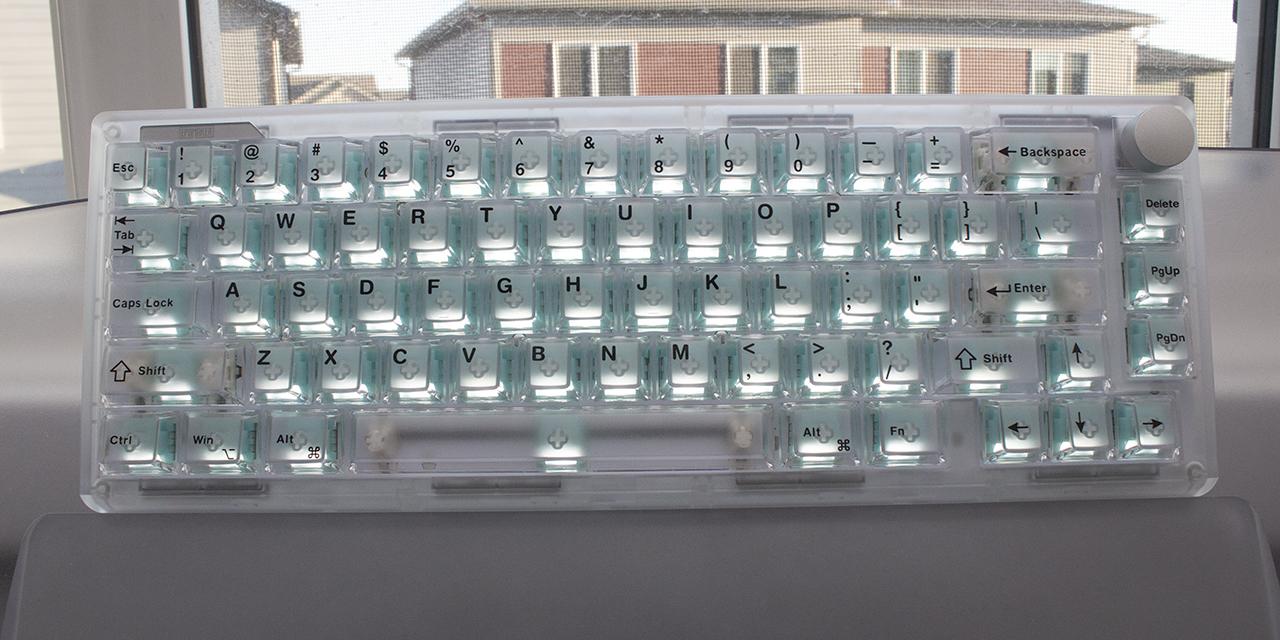
The disassembly of the Epomaker RT82 was straightforward. I began by removing the keycaps using the keycap puller included with the keyboard, which I found was sufficient for the task. This process was repetitive but uneventful with no damage to the keycaps or switches. Once all eighty keycaps were removed, the switches and plate were fully exposed, preparing the keyboard for the next stage of disassembly.

Taking the opportunity to disassemble one of the switches provides a clearer view of its internal structure. As mentioned previously, these pre-lubed switches use a five-pin design, which helps improve stability during installation. The switches offer a total travel distance of 3.6±0.4mm and require an actuation force of 45±5gf. The switches use a standard Cherry-style stem, ensuing broad keycap compatibility.

After removing the eighty keycaps, the switches were next. Using the included keycap puller, the switches were removed without incident. No excessive force was required during this process, and the hot-swappable sockets remained firmly situated. With all the switches removed, the keyboard was prepped and ready for the next phase.

The next step involved separating the keyboard’s case. I removed eight screws from the back of the keyboard, then used a flat-head screwdriver to release two internal latches located on the left and right sides of the frame, allowing the case to split into two halves. This exposed the battery and a thick silicone mat in the bottom half of the case. The battery was disconnected first and without difficulty. The small daughterboard connected to the USB Type-C socket and responsible for switching between different connection types is located in the top-left corner of the frame. This board must be disconnected before further access to the internals. The last connector is attached to the contacts that power the mini display and must be disconnected as well. To undo these connectors, I used a standard pair of household tweezers, but if you have longer fingernails, those will also suffice.

After everything was disconnected, the next step was to remove the sound dampening layers still resting in the top half of the case. There are two layers of foam, one on each side of the PCB. The first and thicker of the two are on the bottom, and must be removed carefully after undoing six more screws, as it is secured with an adhesive layer. On the other side of the PCB is a very thin layer of denser foam, which itself is underneath another thicker layer of foam. On top of these sound dampening layers, we find the polycarbonate plate with the stabilizers still attached. After removing the plate, we find the six silicone gaskets used to isolate the plate from the case. These slide off without difficulty. At the end of the disassembly, we find one last screw securing the mini-display contacts to the top of the keyboard case. It is important to note that not all screws are identical, so organization is key here. That said, all screws can be removed using a single screwdriver, which simplifies the overall process.
The internal layout of the RT82 makes disassembly very simple. After disconnecting three JST, or Japan Solderless Terminal connections, and undoing a few screws, the remainder of the process feels methodical and predictable. If it is done with care and intentionality, I do not see any particularly risky parts of the process. Looking at the internals of a device always gives me a greater appreciation of the complexity that we take for granted. In this case, I gained a greater appreciation of the multi-layered sound dampening, sturdy stabilizers, and the hot-swappable sockets. After the keyboard was reassembled, everything worked as it had before disassembly.
Page Index
1. Introduction, Packaging, Specifications
2. A Closer Look - Hardware and Software
3. A Closer Look - Disassembly and Internals
4. Conclusion