Page 2 - Physical Look - Outside

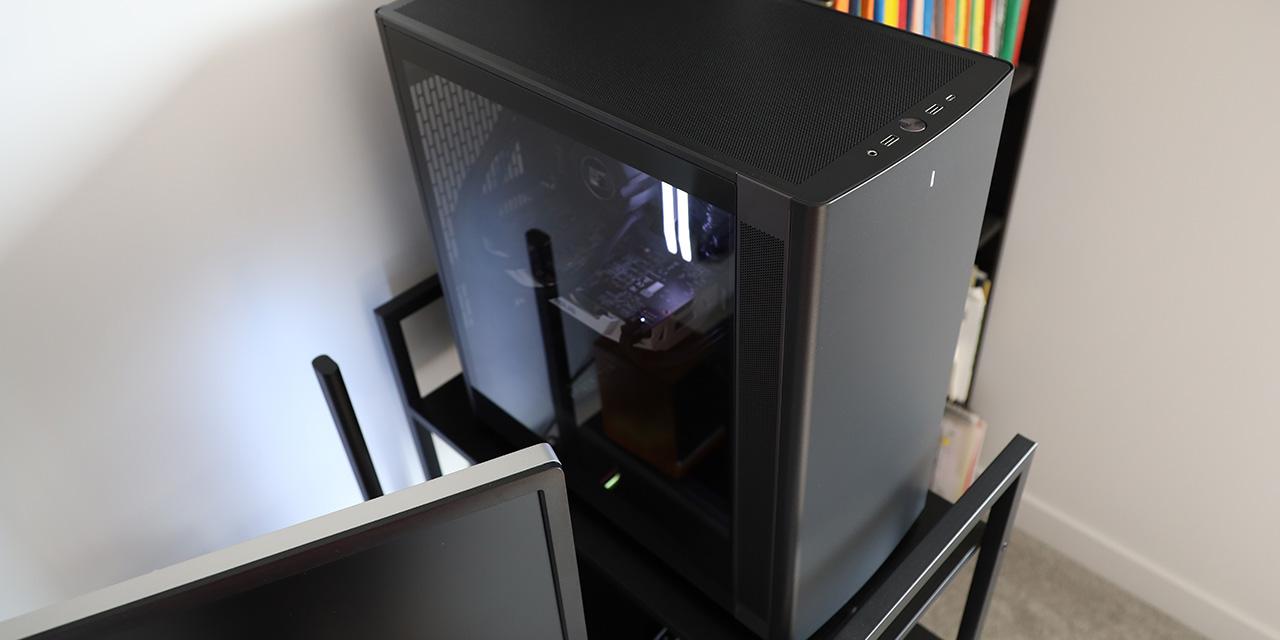
The Fractal Design Pop 2 Vision the newest member of the Pop 2 family. Like the Pop 2 Air, the Pop 2 Vision is only available in traditional white and black, unlike the original Pop Air that has a wide selection of distinct interior color options. Our particular unit is the Black RGB version; other variants include Black and White RGB. Different than the Pop 2 Air, the Pop 2 Vision is fat -- its dimensions are 434mm height, 297mm width, and 441mm depth -- similar to the be quiet! Light Base 600 LX. For the Americans among us, the Pop 2 Vision is just under one foot wide -- put your Subway Footlong on top to confirm. The mid-tower tips the scales at 21.34 lbs, which is quite hefty compared to the Pop 2 Air Black TG RGB at 16.28 lbs. The reason for the extra weight and width is due to the Pop 2 Vision's 270° tempered glass and placement of the PSU behind the motherboard tray rather than at the bottom.
The front and left side panels are tempered glass for an unobstructed view inside. An interesting detail is a fabric tab on the right side featuring Fractal Design's logo. No real estate is lost anywhere for a full 270° view, which is a popular design in the last couple of years seen in products like the Antec C5 ARGB, Corsair 3500X ARGB, SilverStone Lucid 05, Thermaltake CTE E600 MX, and the be quiet! Light Base 600 LX as aforementioned. Both the glass left panel and solid right panel are attached to the main frame via two ball-and-socket joints that run along the top and clips that secure each panel along the bottom. This is not a traditional tempered glass or solid side panel design, but this is the same mechanism as the one found in the Define 7. It is the best I have seen and works extremely well. The mechanisms feel substantial in use. The rest of the chassis is made of quality steel or glass panels.

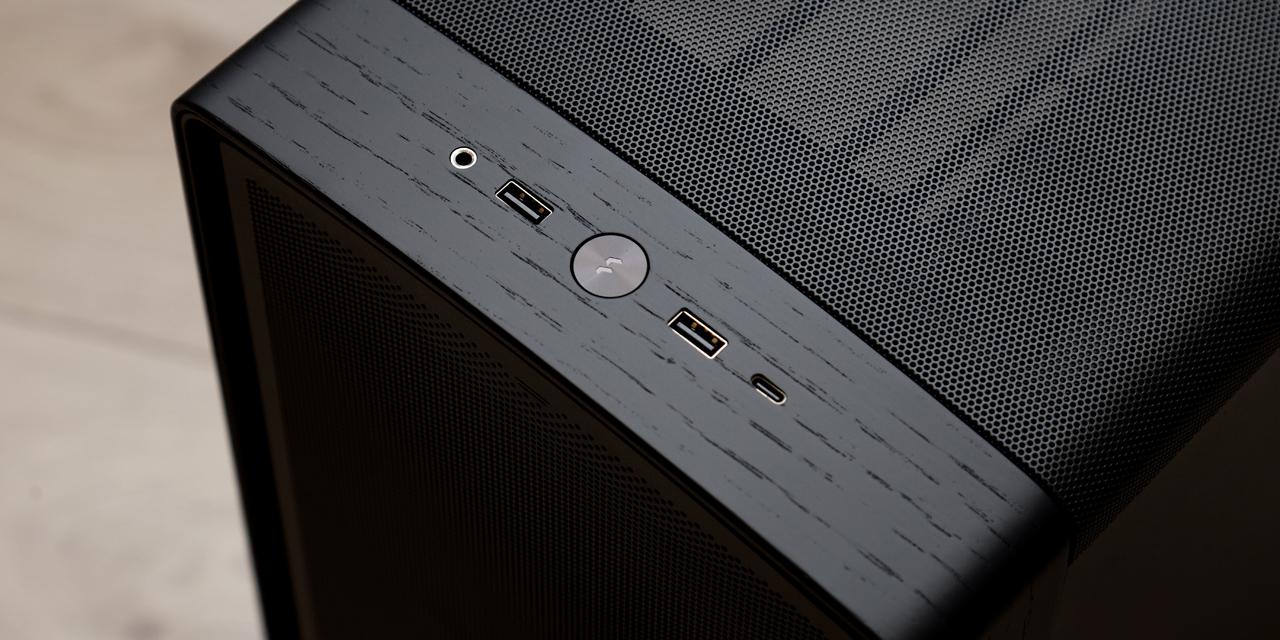
The front panel connectors are located at the top of the Pop 2 Vision. They are placed in a line along the front right side. Starting from the bottom and going up, we have an oval-shaped power button. This is followed by a 3.5mm combination audio jack for headphone out and microphone in, USB 3.2 Type-A port, USB 3.2 Type-C port, and last but not least, a split oval-shaped button for RGB LED control. The top half is Color, which allows you to select between Northern Lights, Summer Sky, Sunset, Mystic Night, Emerald Lake, Radiant Dawn, White, Slow Cycle, Freeze Slow Cycle, Rainbow, and off. The bottom half is Mode, which allows you to toggle Shift, On - Static Color, Slow Chase, Slow Breathing, or off. In the middle of the power button is a RGB LED that is synchronized by the controller. There is no reset button or drive activity LED.
Shifting our focus a little bit, let us take a look at the top of the Fractal Design Pop 2 Vision Black RGB. The top panel is almost completely vented, but there is a magnetic filter with a solid steel frame to keep the dust out. Case designers install top mounted fans to efficiently draw heat away from the processor, or allow you to place an AIO radiator in this location. This makes a lot of sense, since heat rises, so we are only adhering to the natural laws of physics. Unfortunately, this is a two-way street, as dust could settle in your system that way when it is turned off. Having a dust filter here is a fair compromise in my opinion. Furthermore, having four front intake fans from the factory -- more on this later -- will produce positive pressure to keep dust out during normal operation.
The top panel is not removable -- only the dust filter is. You can install up to three 120mm or two 140mm fans in this location. Of course, it can accommodate a radiator of equivalent size, including up to a 360mm model.

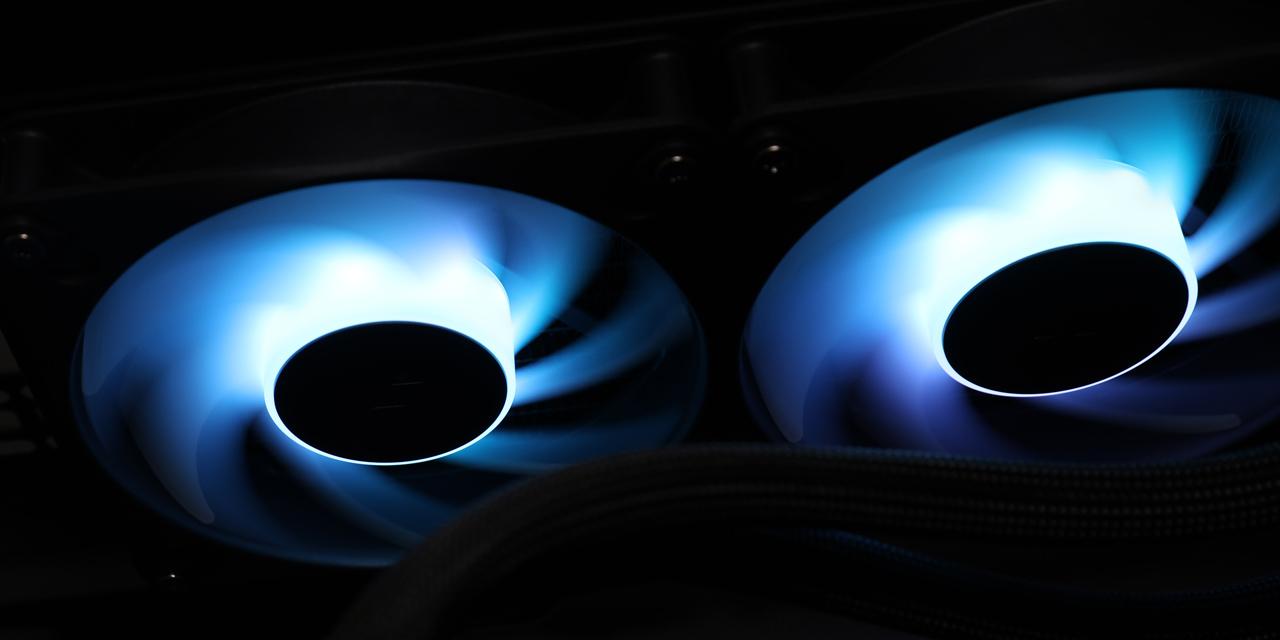
The right side panel is about two-thirds vented with the mesh supposedly doubling as a dust filter, as no other dust filter is included. This is an air intake panel for both the power supply and front fans, as two Aspect 12X Reverse RGB 120mm PWM fans are located near the front.
The back of Fractal Design's Pop 2 Vision Black RGB is painted black to match the rest of the chassis. Compared to traditional cases with a bottom mounted power supply bay, the power supply is behind the motherboard, contributing to its width. Other than that, we can expectantly spot a 120mm fan opening placed adjacent to the motherboard I/O backplate. As aforementioned, both the glass left panel and solid right panel are attached to the main frame via two ball-and-socket joints that run along the top and clips that secure each panel along the bottom. Quick release tabs located at the back enable quick removal. You can add a thumbscrew here for additional security, but thumbscrews are not included.
There are seven bridgeless horizontal expansion card slots, painted black, shown in our photo above. Since they are bridgeless, you can use a vertical GPU riser kit to show off your graphics hardware. A plastic cover covers the thumbscrews for less air leakage and better looks. The plastic cover can be removed by pressing a tab at the bottom.

Four fixed plastic feet with rubber pads can be seen on the Fractal Design Pop 2 Vision Black RGB. The legs provide the chassis with about 2 cm rise over the surface it resides on. The bottom panel has two Aspect 12X Reverse RGB 120mm PWM fans pre-installed from the factory. The handle of the metal mesh fan filter for all the bottom intake fans can be seen in our photo above, which can be pulled out the left side once the glass side panel is removed for easy cleaning. Radiators are not supported in this location.
Overall, the Pop 2 Vision Black RGB case is a solid case with regards to build quality, as one would expect from Fractal Design. This is obviously a much more economical case compared to the flagship Define 7 Dark Tempered Glass, so you will not get nearly as many cool details or features. Still, all the panels fit together reasonably well with minimal panel gaps. Nothing feels flimsy or cheap, and sharp edges are out of the question.
Page Index
1. Introduction, Packaging, Specifications
2. Physical Look - Outside
3. Physical Look - Inside
4. Installation and Conclusion