By: Jadon Lee
July 3, 2026
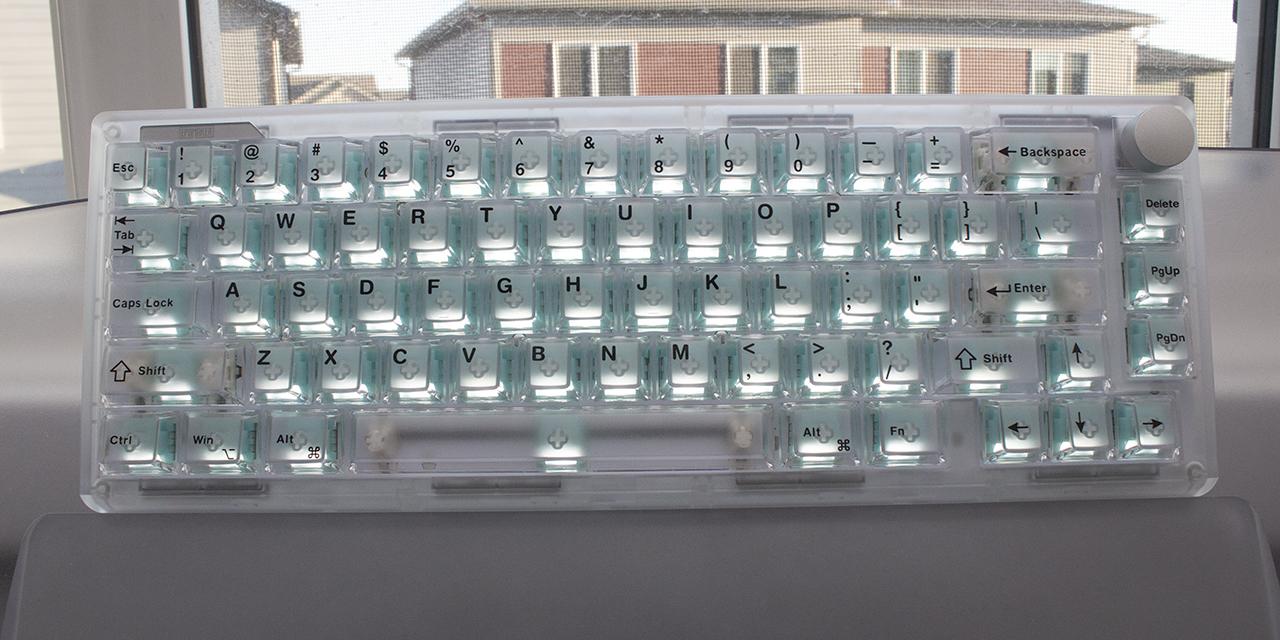
Have you ever heard of the quarter life crisis marathon? For those of you who are not familiar, there seems to be a phenomenon where people in their late 20s or early 30s start running marathons as an antidote for their quarter life crisis. This seems to be a healthy outlet for those combating whatever issues may be in their life. Why am I talking about this? Apparently, I have hit my quarter life crisis a bit early and have begun my running journey. Why am I doing this? Could it be the fear of career stagnation? Yes, it absolutely is, and I will not even deny that. For me, it is about being able to grow in areas I can control. Working on my personal fitness has started out to be a fun and challenging journey with a lot of excitement ahead. I have friends in my community encouraging me and pushing me to go further. It is really nice having the comradery surrounding me to help me grow. I honestly believe it would be so hard to keep going without the support I have, as I find myself feeling discouraged if I am not seeing immediate progress. The reminders to be patient and the constant push to do more than I thought I could do is exactly what I need to grow. I am continuously growing my discipline to continue on this journey, just like how Epomaker continues to remain disciplined in further developing their keyboards with the TH80 V2. Will this keyboard show the progress for all of Epomaker’s efforts? Keep reading to find out!

Our review unit of the Epomaker TH80 V2 came alongside the HE108, TH80 V2 Pro, Luma100, and RT100 Pro in a tightly wrapped in a plastic that covered many layers of bubble wrap underneath. The box was shipped to us here in Calgary, Alberta from Shenzhen, China via eMile Express. The shipping process was good with no visible impact on the retail box. I was not worried about the condition of the product itself, as there was no noticeable damage.
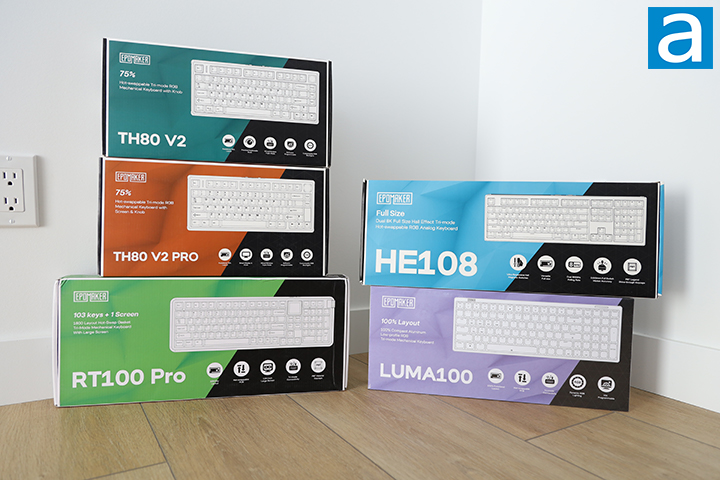
The Epomaker TH80 V2’s box design is aesthetically pleasing, using a black and green exterior. The front displays TH80 V2 name on the bottom left. Epomaker’s logo is placed on the top left. We find a general render of the keyboard beside the logo with a few features listed below it. The back mentions some additional information. This is a straightforward design that offers very minimal, but relevant, information. Personally, I do not mind this, as I appreciate the lack of clutter and simplicity.
Before we continue, here are the specifications for the Epomaker TH80 V2, as specified by the manufacturer’s website:
Brand: Epomaker
Model: TH80 V2
Layout: 75% ANSI US Layout
Number of Keys: 79 Keys and 1 knob
Battery: 8000mAh
Battery Life: 200 Hours (RGB Off) and 40 Hours (RGB On)
Connectivity: Tri-Mode Wireless (2.4Ghz/BT/USB Wired)
Compatibility: Mac/WIN
Front Height: 20mm
Back Height: 34mm
Typing Angle: Three Angles at 6°, 8° and 10.5° with the 2-stage adjustable kickstand
Case Material: ABS Plastic
Plate Material: PC
Flex-Cut: Yes
Stabilizers: Plate-Mounted Stabilizers
Mounting Structure: Gasket-Mount
Sound Optimized: 5-Layer Dampening including Noise-Absorbing Foam, Switch Pad, Sound Enhancement Pad, Switch Socket Pad and Bottom Silicone.
Keycaps Profile: Cherry
Keycap Material: PBT Plastic
Keycaps Manufacturing Technique: Double-shot
Switch: Factory Lubed Mechanical Switch
Hot-Swappable: Yes, the TH80 V2 has Hot-swappable with 3/5-pin mechanical switches
RGB: Yes
Polling Rate: 1000hz(USB/2.4Ghz) or 125hz (BT)
Latency: 2ms (Wired), 5ms (2.4Ghz) and 11ms (BT)
Keyboard Dimensions: 323.27*140.72*44.08mm
Keyboard Weight: 0.9kg
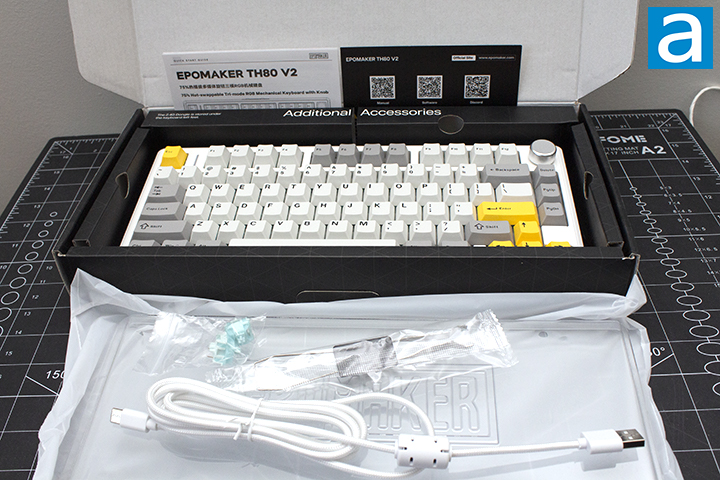
Out of the box, you will receive the Epomaker TH80 V2 keyboard with a cable, 2.4 GHz receiver, keycap/switch puller, extra switches, and a user manual. The keyboard is wrapped in plastic alongside a plastic cover to prevent any surface scratches. This is the quality that I have come to expect from Epomaker. The quality of the packaging is better than most manufacturers, as the plastic cover will protect the surface from general transportation damages.
Page Index
1. Introduction, Packaging, Specifications
2. A Closer Look - Hardware and Software
3. A Closer Look - Disassembly and Internals
4. Conclusion