Page 3 - A Closer Look - Disassembly and Internals

With the YUNZII B87's rounded edges, I was unable to get inside the keyboard, as the plastic clips held the top and bottom shells together quite tightly. I had difficulty finding enough of a gap to pry the two shells away from each other and get inside. This is a bit unfortunate, given how many people may want to modify their keyboard after purchasing it. While I would not dock YUNZII for this, I can see why it may be a deterrent to potential buyers.
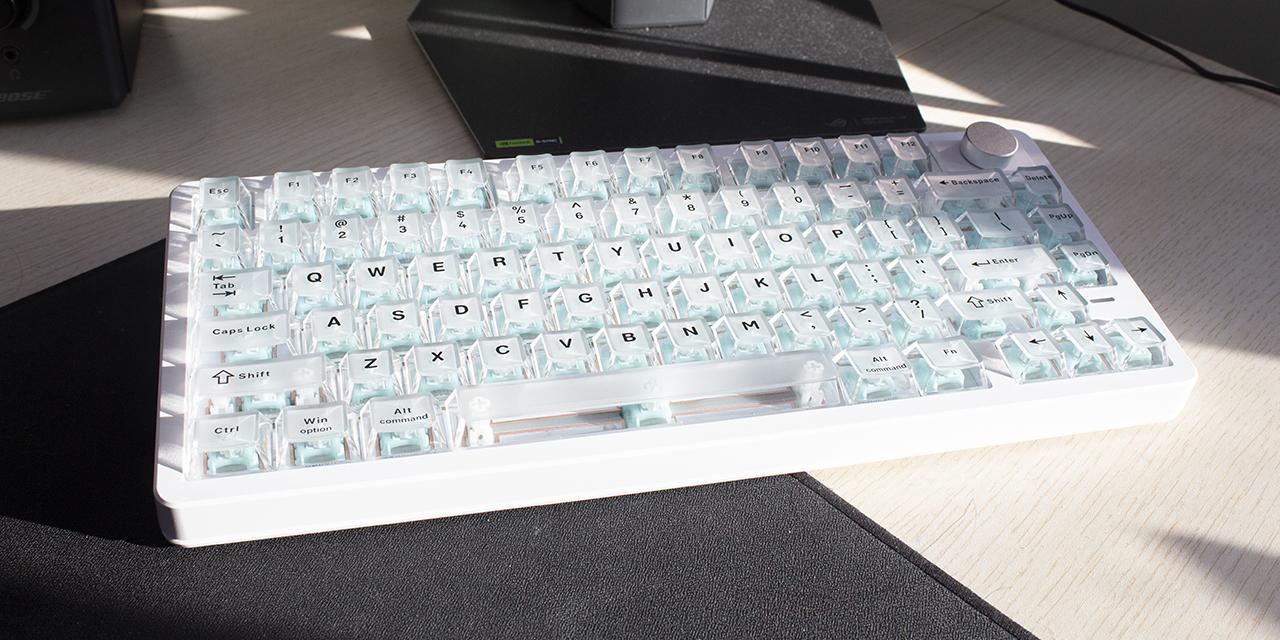
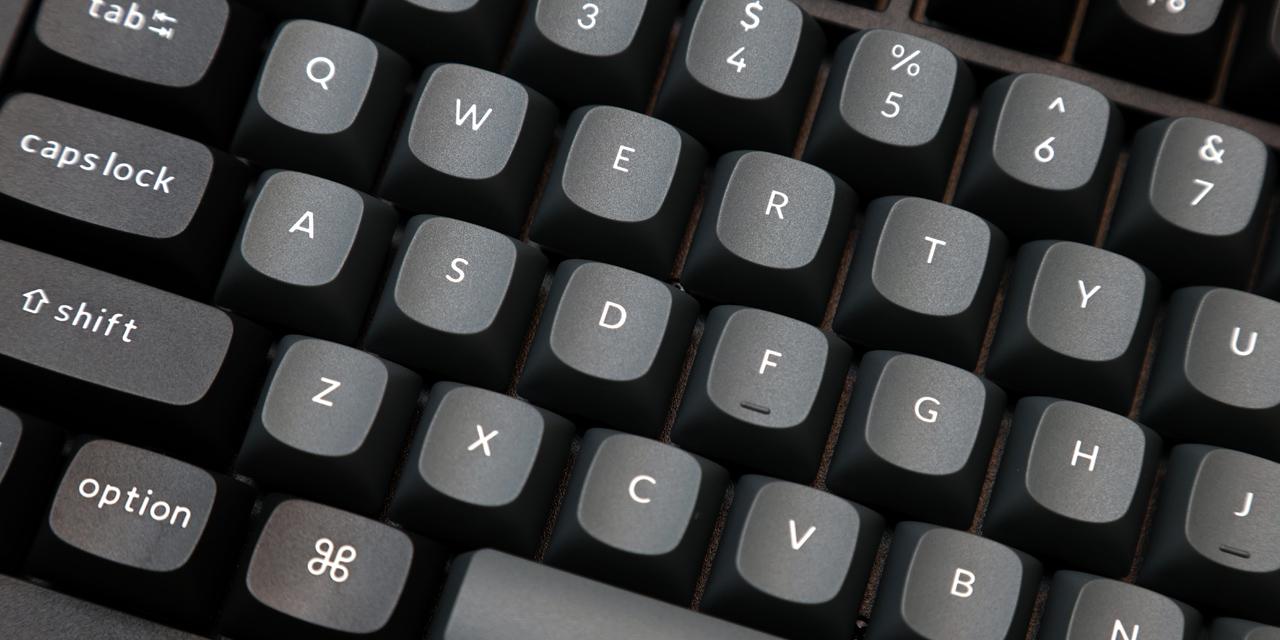
Instead, we can take a closer look at the components that make up the YUNZII B87. Starting from the top, we have standard PBT plastic keycaps. I like PBT as a material choice, as it is more durable and does not shine or fade over time compared to other commonly used plastics like ABS. The thicker wall also adds to a deeper sound when used. The legends are dye-sublimated, which is a process where heat is applied to a solid dye, it sublimates into a gas and permeates into the keycap material. It is a slightly cheaper process than double-shot injection, but still results in a durable print that resists fading and wear after time. It is an improvement over UV printing too. The choice of font is clear while still matching the overall cute aesthetic of the B87. The keycaps use standard MX stems with an MOA profile. This profile means every key is about the same height regardless of the row. It also generally has rounded edges and sides, which again fit into the overall design. However, there is also an indentation, so users’ fingers will rest comfortably in each key.

Longer keys on the YUNZII B87, such as the space bar and Enter key, use lubricated Cherry-style stabilizers on the sides to prevent wobbling. I did not notice any rattling on these stabilizers, which shows they are properly lubricated. You can also see in between the gaps, there is a silicone layer to help in reducing vibrations and further tune the keyboard in terms of its sound.
From this view, the top plate is exposed and made of a translucent polycarbonate. Under the plate, there are five layers of padding inside, including a sandwich foam, IXPE switch pad, PET sound foam, switch foam under the PCB, and a silicone pad under everything to fill in the shell of the YUNZII B87. These multiple layers are what gives the keyboard a satisfying typing feel and sound. The whole board is gasket mounted between the top and bottom frames.

One main selling point of the YUNZII B87 is its switch technology. Mechanical switches consist of a top house, base, stem, and spring, with varying levels of tactile and audible feedback. More specifically, these are YUNZII's Milk V2 Linear mechanical switches. As the name implies, they are linear in travel with an actuation force of 40g and a bottoming out force of 50g. They actuate at 2.0mm and travel a total of 3.6mm. The expected lifespan of these switches is fifty million keystrokes. These connect to the PCB with hot swap sockets, and the sockets support both three-pin and five-pin mechanical switches. As such, if an individual one fails or you want to change out all the switches, you can easily do so without needing a soldering iron.
After taking apart the Milk V2 Linear switch, you can see it has a clear top and an opaque white bottom. The white stem in the middle is held up by a 22mm stainless steel spring. The switch stem has minimal lateral movement inside the housing to ensure the actuation feels stable and does not wobble about. The stem has an MX middle with extra side parts around it to increase the keycap stability. The switches are factory lubricated for a smoother typing feel and sound. The stem is made from polyoxymethylene or POM for a smooth travel. The upper casing is polycarbonate, while the bottom is PA66, which refers to a polyamide or nylon 66. These also have a light diffuser to spread the backlighting.
Page Index
1. Introduction, Packaging, Specifications
2. A Closer Look - Hardware and Software
3. A Closer Look - Disassembly and Internals
4. Conclusion